Car Rental in the Kurdistan Region of Iraq
Everything a visitor needs to know about renting and driving a car in the Kurdistan Region — when it makes sense to self-drive, when to hire a driver, the paperwork, the roads, and the practical realities on the ground.
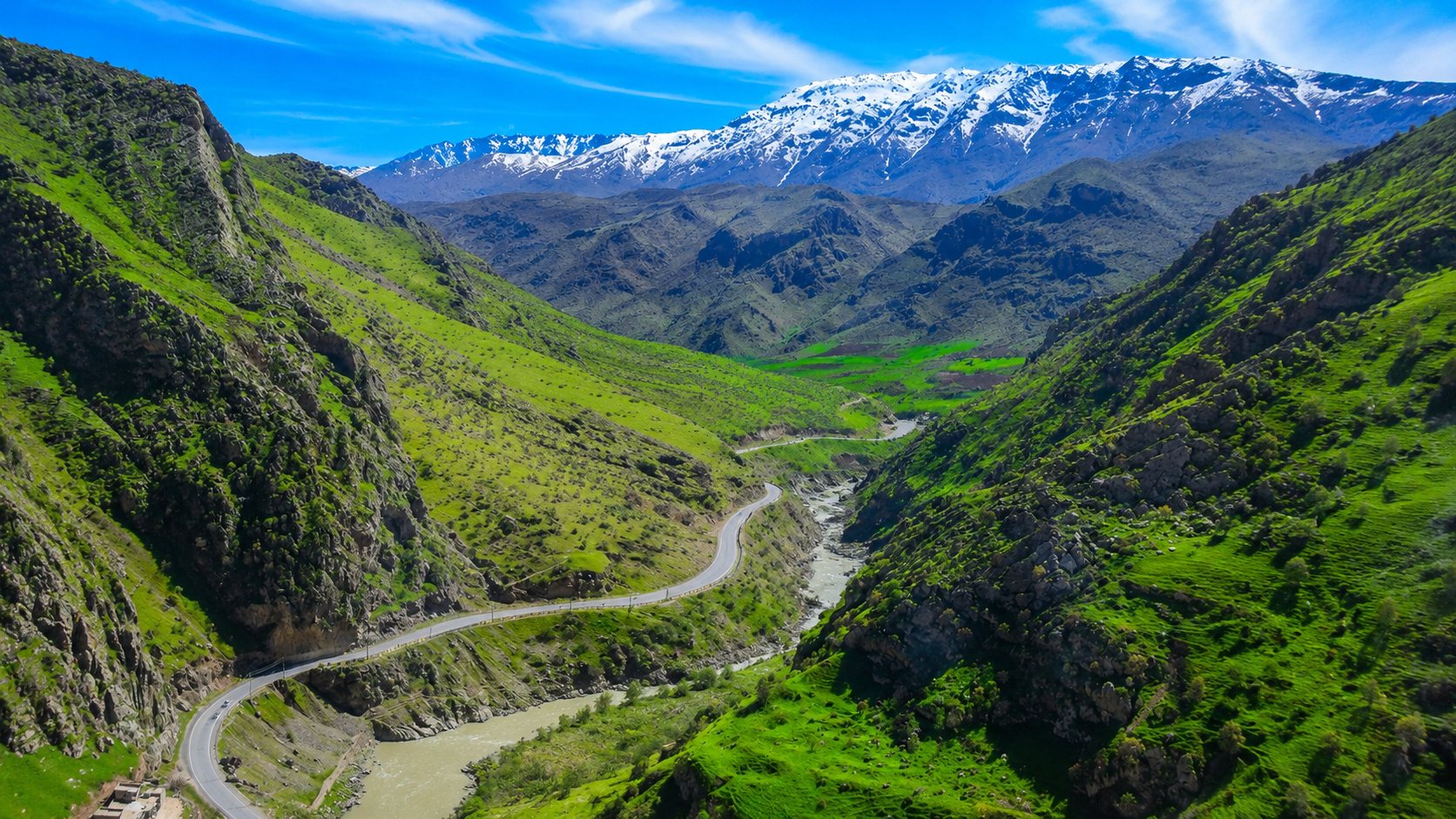
Having your own wheels can transform a trip to the Kurdistan Region of Iraq. The region rewards travellers who can chase a mountain viewpoint at golden hour, stop on a whim at a roadside teahouse, or string together several villages and valleys in a single day. Public transport between towns exists but is limited and not always convenient, so for many itineraries a car — whether you drive it yourself or hire one with a driver — is the key that unlocks the landscape.
That said, driving here is not the same as driving at home. Roads range from smooth modern highways to narrow mountain switchbacks, city traffic can be busy and assertive, security checkpoints are routine, and the rules around licences, insurance and documents are worth getting right before you arrive. This guide walks you through the whole decision: whether to rent at all, what you need, where to pick up a car, what the roads and checkpoints are really like, how costs tend to work, and what your alternatives are if you would rather not get behind the wheel.
One honest note up front: rules, prices, availability and entry requirements in this part of the world change, and they can differ from one rental company to the next. Treat everything here as a practical orientation rather than a guarantee, and always confirm the current details with your chosen rental firm, your insurer and official sources before you travel.
Should you rent a car?
The first decision is not which car to rent, but whether you should be the one driving it at all. There are two very different ways to put a vehicle to work on your trip: self-drive, where you take the keys and the responsibility, and hiring a car with a driver, where a local professional handles the wheel while you sit back and look out of the window. Both are common here, and the right choice depends on your confidence, your itinerary and how much mental energy you want to spend on logistics.
Self-drive: freedom with responsibility
Self-driving suits independent travellers who like spontaneity and are comfortable adapting to unfamiliar road culture. It gives you total control over your schedule: you can leave at dawn for the mountains, linger as long as you like at a viewpoint, and rework your plans on the fly. For a road-trip-style holiday that hops between Erbil, the Rawanduz area, Shaqlawa and the valleys, a car of your own is hard to beat.
The trade-off is that everything becomes your job — navigation, parking, fuel, checkpoints, other drivers, and any scrape or breakdown along the way. If the idea of negotiating busy city junctions or steep mountain roads in an unfamiliar country makes you tense, self-driving may cost you more in stress than it saves in money.
Hiring a car with a driver
Hiring a car with a driver is enormously popular here, and for good reason. A local driver knows the roads, reads the traffic instinctively, handles checkpoints smoothly, knows where to park and often becomes an informal guide who can point out sights, suggest a good lunch stop and translate when needed. You simply agree a route and a price, then enjoy the scenery. For mountain day trips, multi-stop sightseeing days, or travellers who would simply rather not drive, this is frequently the most relaxed and efficient option.
It naturally costs more than self-drive because you are paying for a person as well as a vehicle, and you have a little less spur-of-the-moment freedom. Many visitors land on a hybrid approach: ride-hailing apps and taxis inside the cities, and a hired car with a driver for longer days out into the landscape. There is no single right answer — match the choice to the kind of traveller you are.
What you need to rent
Paperwork is the part most visitors worry about, and it is the part where you should be most careful to check current requirements rather than rely on hearsay. Rules can differ between rental companies and can change over time, so use the points below as a checklist of things to confirm, not as a fixed set of guarantees.
Confirm before you travel
Licence, International Driving Permit, insurance and minimum-age rules vary by company and change over time. Verify exactly what your chosen rental firm and insurer require — and arrange documents like an IDP at home in advance — before you book or fly.
Driving licence
You will need a valid driving licence from your home country. Many companies are most comfortable when that licence is presented together with an International Driving Permit, particularly if your home licence is not in English or Arabic. Make sure your licence is current and will not expire during your trip.
International Driving Permit (IDP)
An IDP is essentially an official translation of your home licence and is widely recommended for driving here. It is issued in your home country before you leave — you generally cannot obtain one after you arrive — so sort it out well ahead of your trip. Some rental firms and some checkpoints may want to see it, so it is sensible to carry one even if a particular company says it is optional. Always confirm the current expectation with your rental company.
Insurance
Understand exactly what insurance comes with the car and what it does not. Ask what is covered, what the excess or deductible is, whether there is a damage deposit, and whether extra cover is available to reduce your liability. Read the policy rather than assuming, and clarify what happens in the event of an accident, theft or damage. Insurance terms are a common source of misunderstanding, so get the details in writing.
Identity, age and payment
You will typically need your passport and your visa or entry documentation, and companies often set a minimum driver age and a minimum length of time you must have held your licence. A deposit is usually required, frequently on a card, and is held against damage or fees. Check the accepted payment methods in advance, as card acceptance can vary.
Where to rent
Car hire is concentrated in the main cities, with Erbil offering the widest choice as the region's primary gateway. There are broadly three places you might pick up a vehicle.
Airports
Erbil International Airport and Sulaymaniyah International Airport are convenient pickup points if you want wheels from the moment you land. Airport collection saves a transfer into town first, but availability and the range of vehicles can be more limited than in the city, so booking ahead is wise. If you would rather find your feet before driving, you can always arrange a transfer into the city and collect a car a day or two later — see our airport transfers guide for arrival options.
City rental offices
City-centre and suburban rental offices in Erbil, Sulaymaniyah and Duhok often give you the broadest selection and a chance to inspect the actual vehicle before committing. Picking up in the city also lets you ask questions face to face about routes, insurance and documents.
Hotels and agencies
Many hotels and travel agencies can arrange a rental, or a car with a driver, on your behalf. This is the easy, low-effort route — your accommodation handles the arrangement — and it is especially useful if you want a driver for a specific day trip rather than a car for your whole stay. Whichever channel you use, get a clear written quote and confirm what is included before you hand over a deposit.
Driving conditions & roads
Road quality across the Kurdistan Region varies enormously depending on where you are. The major highways connecting Erbil, Sulaymaniyah and Duhok are generally well surfaced and easy to drive, with multiple lanes on the busier stretches. Venture off these arteries, however, and conditions change quickly: rural and mountain roads can be narrow, winding, steep, poorly lit and occasionally rough, with the surface affected by weather and the season.
Driving culture in the cities tends to be busy and assertive. Lane discipline can be loose, junctions can feel improvised, and you will need to be alert and decisive without being aggressive. Expect other road users to make spontaneous moves, watch for pedestrians, and keep a calm, defensive mindset. Traffic is heaviest at typical commuting times and in the evenings when people are out.
Distances between the headline destinations are manageable, but journey times can be longer than the map suggests once you factor in city traffic, mountain gradients and checkpoint stops. Build in a buffer, start mountain days early, and try to avoid arriving anywhere unfamiliar after dark. Weather matters too: winter brings rain, fog and snow at altitude, while summer heat can be intense, so plan around the conditions for the time of year you visit.
Road rules, checkpoints & documents
Vehicles drive on the right. The usual sensible rules apply: wear your seatbelt, do not use a handheld phone while driving, observe speed limits, and never drink and drive. Beyond the basics, the single most distinctive feature of road travel here for newcomers is the checkpoint.
Checkpoints are normal
Security checkpoints are a routine and expected part of driving in the region, particularly on intercity routes and near administrative boundaries. For the vast majority of visitors they are quick and uneventful. The key is to be prepared: slow down on approach, follow the officers' instructions, be patient and polite, and have your documents ready to show. A friendly, calm manner goes a long way.
Documents to keep within reach
Keep the following accessible — not buried in a suitcase in the boot — so you can present them easily at a checkpoint or if requested:
- Your passport with your visa or entry stamp.
- Your driving licence and International Driving Permit.
- The vehicle's registration and rental documents.
- Proof of insurance for the car.
It is worth asking your rental company to confirm precisely which vehicle papers should be in the car and to point them out to you at pickup. If you plan any travel beyond the Kurdistan Region into other parts of Iraq, be aware that this can involve additional restrictions and checks on rental vehicles; ask the company in advance whether it is permitted and check current travel advice before setting off.
Verify locally
Road rules, document requirements and the situation at checkpoints can change. Confirm current rules with your rental company and consult up-to-date official travel guidance before and during your trip.
Mountain & rural driving
The mountains are the reason many people want a car in the first place, and the scenery on routes such as the road through the Rawanduz canyon or up toward the high country around Korek is genuinely spectacular. But mountain driving demands more care and a suitable vehicle. Roads climb, twist and narrow, drops can be steep, and you will share the way with local traffic, the occasional slow truck and sometimes livestock.
For rougher routes and higher ground, a vehicle with good ground clearance — often an SUV — is a sensible choice, and in winter you should think carefully about snow, ice and whether your route is passable at all. Drive at a pace that lets you stop safely, use lower gears on long descents to spare the brakes, sound your horn gently at blind bends where that is the local custom, and give larger vehicles room. Refuel before heading into remote areas, because filling stations thin out away from the towns, and mobile signal can disappear in deep valleys.
If you are not fully confident on demanding mountain roads, this is exactly the situation where hiring a car with an experienced local driver pays for itself in safety and peace of mind. To plan where those drives lead, see our mountains and nature guide.
Costs & what affects them
We deliberately do not quote specific prices, because car-hire rates here move with the season, the company and the vehicle, and any figure printed today could mislead you tomorrow. What is more useful is understanding the levers that push the price up or down, so you can judge a quote sensibly and compare like with like.
- Vehicle type. A small compact car is the most economical choice; SUVs and larger or higher-clearance vehicles for mountain routes cost more.
- Self-drive vs driver. Adding a driver means paying for a person as well as the car, so it is naturally more expensive than driving yourself.
- Rental length. Longer rentals often attract a lower daily rate than a single day's hire.
- Season and demand. Busy travel periods and holidays can push prices and availability in the wrong direction, so book ahead when you can.
- Insurance and excess. More comprehensive cover or a lower excess usually costs more up front but reduces your risk if something goes wrong.
- Extras and deposits. Mileage limits, additional drivers, child seats, fuel policy and the security deposit all affect the real total — read the small print.
Confirm prices directly
Treat any cost as a moving target. Always obtain a clear written quote that itemises the rate, insurance, deposit, mileage and fuel policy, and confirm the current price with the company before you commit.
Alternatives to renting
Driving is not the only way to get around, and for plenty of visitors it is not the best one. If self-driving does not appeal, you have several reliable alternatives that you can mix and match.
Taxis and ride-hailing
Within the cities, taxis are widely available and ride-hailing apps operate in the larger urban areas, offering an easy, low-stress way to move around without the hassle of parking. Apps that show the fare in advance can be especially reassuring for visitors. For most in-town movement, this is all you need.
Hiring a car with a driver
As covered earlier, hiring a car with a driver for a day or for your whole trip is one of the most popular options here. It removes every driving headache and adds local knowledge, which is hard to beat for mountain day trips and multi-stop sightseeing.
Intercity travel and tours
Shared and private cars run between the main cities, and organised tours bundle transport, a driver and a guide into one package. If your priority is seeing the highlights without logistics, a guided trip can be the simplest route — explore our Kurdistan tours guide for how that works.
Tips for a smooth rental
A little preparation makes the difference between a rental that quietly works and one that causes friction. Keep these practical habits in mind.
- Sort documents early. Arrange your International Driving Permit and check licence validity at home, long before you fly.
- Inspect the car at pickup. Photograph existing scratches, dents and the fuel level, and make sure they are noted on the rental agreement before you drive off.
- Read the insurance. Understand the excess, deposit and what to do in an accident, and keep emergency and rental-company contact numbers saved.
- Match the car to the route. Choose a higher-clearance vehicle for serious mountain or rural driving, especially in winter.
- Keep documents handy. Store passport, licence, IDP and vehicle papers within easy reach for checkpoints.
- Drive defensively and unhurried. Allow extra time, start mountain days early, and avoid unfamiliar roads after dark.
- Carry some cash and data. Useful for fuel, parking and staying navigated where card payments or signal are patchy.
- When in doubt, hire a driver. If a route or situation feels beyond your comfort, a local driver is a safer, calmer choice.
Manual provider match
Ask for a car-rental provider match
Share the dates, route and vehicle needs that matter to you. We can save your request for manual review; we do not promise inventory or confirm a rental.
We do not take payment, promise availability, or share your request with an unverified provider. A manual review is required before any introduction.
Frequently asked questions
Do I need an International Driving Permit to rent a car in the Kurdistan Region of Iraq?+
Is it better to self-drive or hire a car with a driver?+
Are there checkpoints when driving in the Kurdistan Region?+
What are the roads like for driving?+
How much does it cost to rent a car?+
Can I drive a rental car between Kurdistan Region cities and into the rest of Iraq?+
What are the alternatives to renting a car?+
Keep exploring
Sorting out how you arrive matters too — read our airport transfers guide for getting from the runway to your hotel. For broader practicalities, our travel tips and first-time visitors guide cover money, etiquette, connectivity and more. And once you have wheels, point them toward the mountains and nature that make a road trip in the Kurdistan Region so rewarding.
Get featured on VisitKurdistan.com
We are building a free business directory to connect travellers with the people who make trips to the Kurdistan Region of Iraq run smoothly. If you run a hotel, resort, tour company, restaurant, travel agency, car rental firm or adventure experience, you will soon be able to list your business here and reach visitors planning their trip.
Directory categories
Register your interest
The directory is not public yet. We verify submissions, record corrections and claims, label any sponsored or affiliate-supported relationship, and expire records that cannot be kept current. We never sell placement or present a listing as a review or recommendation.
VisitKurdistan.com is an independent travel guide. Listings will be clearly marked and are not endorsements; we are not affiliated with any government tourism board or official authority.
VisitKurdistan.com is an independent travel guide and is not affiliated with any government tourism board or official tourism authority. Prices, availability, opening hours, entry rules and seasonal access change frequently — always verify current details with an official or local source before you travel.