Few places in the Middle East are as green and mountainous as the Kurdistan Region of Iraq. The land rises from the plains around Erbil into the folds of the Zagros, where snow-capped ridges, river gorges and wildflower meadows create a landscape that surprises almost every first-time visitor. This guide covers the peaks, gorges, waterfalls, lakes and wild places worth seeking out, along with practical advice on seasons, activities and staying safe.
The Zagros Mountains
Forming a natural border to the east and north, the Zagros range dominates the landscape and shapes the region's climate, culture and history. In spring the lower slopes explode with green grass and wildflowers, creating the classic imagery of Kurdistan; in winter the high peaks are blanketed in snow, offering a stark and beautiful contrast. The mountains have long been a refuge and a homeland, and their valleys hide villages, orchards, shepherds' trails and the occasional ancient site. For a closer look at the range, its major summits and how to visit them, see our dedicated Zagros mountains guide.
Notable peaks and ranges
The region's skyline is defined by a handful of celebrated peaks and ranges, each with its own character. Our full guide to the Zagros mountains covers them in detail; here is a quick orientation:
- Halgurd Mountain: Among the highest peaks in the region, rising over 3,600 metres near the Iranian border. It is the great prize for serious trekkers seeking an alpine challenge, usually attempted in summer once the snow has retreated.
- Korek Mountain: Reached by a cable car from near Rawanduz, Korek is the most accessible high mountain, with sweeping views, summer cool and a short winter ski season.
- Safeen Mountain: Easily reached from Erbil via Shaqlawa, Mount Safeen offers excellent ridge walks and panoramic views over the valley below.
- Azmar and Goizha: The twin mountains overlooking Sulaymaniyah, famous for sunset views, switchback roads and evening picnics with the city lights spread out beneath.
- Pira Magrun: A dramatic massif near Sulaymaniyah, snow-streaked well into spring and popular with local hikers.
Gorges and waterfalls
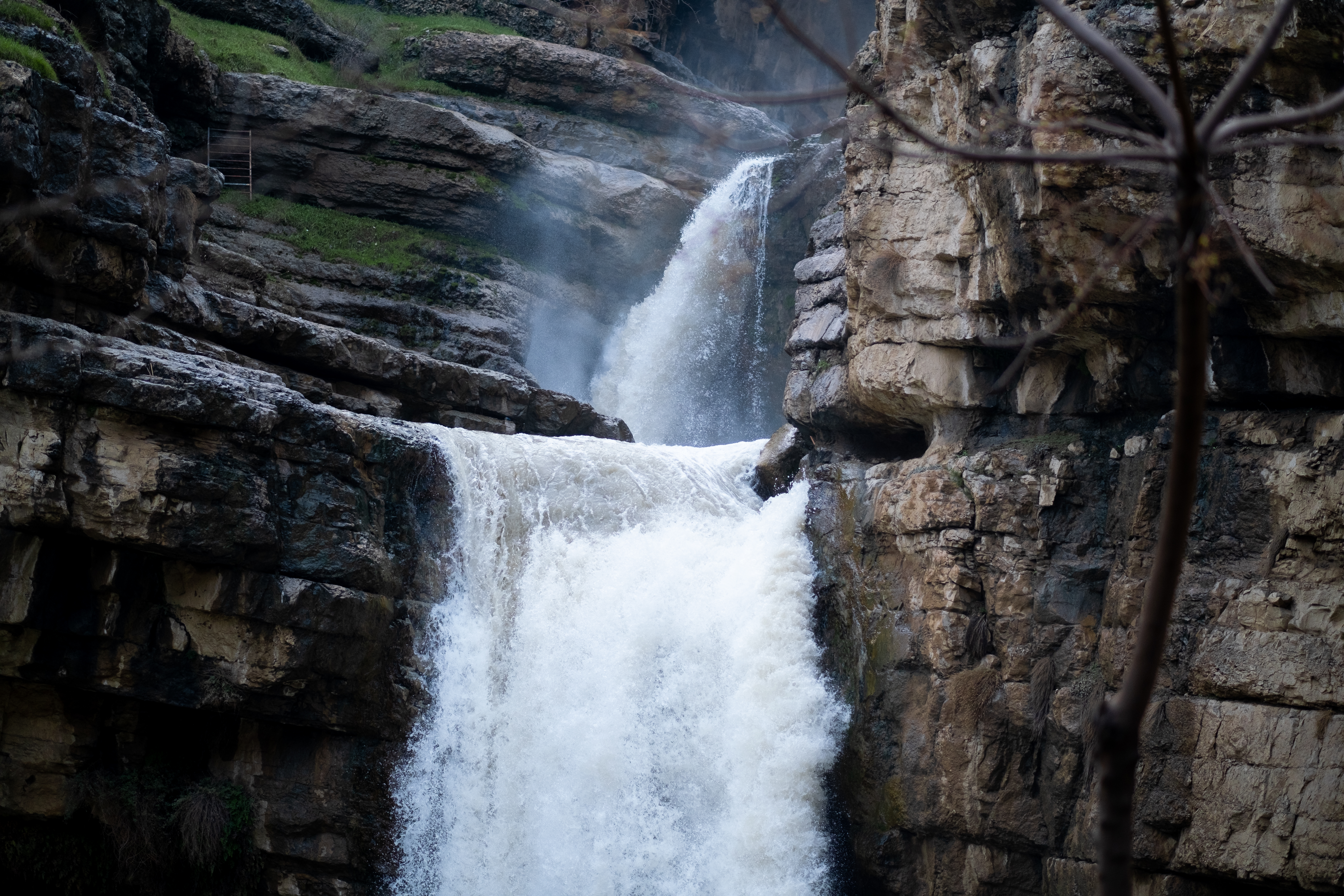
Water has carved the limestone of the region into some of its most spectacular features. These are among the most popular natural attractions, especially in spring when snowmelt swells the rivers:
- Rawanduz Canyon: Often compared to the Grand Canyon, this sheer-walled gorge is breathtaking, with the historic Hamilton Road winding along its edge. Read our dedicated Rawanduz guide for the full picture.
- Gali Ali Beg: The most famous waterfall in the region, set in a narrow, dramatic gorge and well known enough to feature on the 10,000 dinar banknote.
- Bekhal Waterfall: Close to Gali Ali Beg, Bekhal is wider and livelier, often bustling with families enjoying tea at tables set right beside the rushing water.
- Dola Lawa and beyond: Quieter valleys and lesser-known cascades reward travellers willing to explore away from the main stops.
Lakes and rivers
The mountains feed broad rivers and reservoirs that offer a gentler side of the outdoors. Dukan Lake, the largest body of water in the region, spreads between rolling hills an easy drive from Sulaymaniyah and is a favourite for boating, swimming and lakeside fish lunches — see our Dukan Lake guide. Darbandikhan Lake to the south offers similar scenery, while the Greater and Lesser Zab rivers thread through the northern valleys, green and powerful in spring.
Caves and deep history
The region's limestone is riddled with caves, some of which preserve traces of human life stretching back tens of thousands of years. The most celebrated is Shanidar Cave, high in the Bradost mountains near Soran, where the discovery of Neanderthal remains made the site world-famous in archaeology. It is a remarkable place to combine mountain scenery with a genuine sense of deep time — read our full Shanidar Cave guide for its history and how to visit.
Hiking and trekking
Independent trekking is highly rewarding but requires preparation. While popular spots have clear paths, remote areas remain wild and unmarked. Spring, particularly April and May, is the absolute best time for hiking, when the weather is mild and the landscapes are vibrantly green; autumn is a close second for its clear, settled days. Carry plenty of water, sun protection and proper footwear, and tell someone your route before heading into remote terrain.
One important safety note: in some border districts there is a residual risk from old landmines left by past conflicts. Always ask locals about safety before venturing completely off established trails, and consider hiring a local guide for remote routes — they add enormously to the experience as well as to your safety.
Winter and skiing
From roughly December to March the high mountains turn white, and the region enjoys a short but genuine winter season. Korek Mountain near Rawanduz is the main destination, with a cable car and basic winter facilities, while the highest peaks hold snow for months. Lift operations, opening dates and snow conditions vary considerably from year to year, so treat winter sports as a bonus rather than a guarantee and verify the latest situation before you travel.
Wildlife and plants
The Zagros support oak woodland, wild pistachio and, in spring, sweeping carpets of wildflowers that draw both nature lovers and local families on weekend outings. Birds of prey wheel above the ridges, wild goats pick their way across the crags, and the most remote corners are home to rare species including the Persian leopard. For sheer colour and abundance of life, nothing beats a spring visit.
Best time to visit and what to bring
Spring (April–May) is the green, flowering, waterfall season and the best all-round time for nature. Autumn (September–October) brings clear skies and comfortable temperatures. Winter offers snow and a short ski season, while summer is hot in the lowlands but cool and pleasant at altitude. Whatever the season, bring layers — mountain weather changes quickly — along with sturdy shoes, sun protection and plenty of water.
Seasonal access, road conditions, cable-car and ski operations, and the state of mountain tracks all change through the year. Use this guide as a starting point and verify current conditions locally before you travel.