Sulaymaniyah · Slêmanî
Sulaymaniyah Guide
Affectionately known as Slêmanî, this city is considered the cultural and intellectual heart of the Kurdistan Region, famous for its arts, literature and vibrant cafe culture.
A short history of Sulaymaniyah
Sulaymaniyah is, by the standards of the region, a relatively young city: it was founded in 1784 by the Kurdish prince Ibrahim Pasha Baban and named in honour of his father, Sulaiman Pasha. Unlike Erbil, which grew slowly over millennia, Sulaymaniyah was deliberately established as the capital of the Baban principality.
From the start it was conceived as a centre of learning and culture, attracting poets, scholars and religious figures. That heritage endured: the great Kurdish poets Nalî and Mahwî were associated with the city, and it became known as a cradle of modern Kurdish literature, journalism and political thought.
The twentieth century brought hardship as well as creativity, and the city carries the memory of the Ba'athist era's repression — most starkly preserved at the Amna Suraka security complex, now a museum. Today Sulaymaniyah is the second-largest city in the Kurdistan Region of Iraq and retains its reputation as the region's cultural and intellectual capital.
Where is Sulaymaniyah?
Why visit Sulaymaniyah?
If Erbil is the region's commercial and historical capital, Sulaymaniyah is its cultural soul. Visitors come for its museums, its bookshops and its famous cafe scene, and for a noticeably relaxed, open atmosphere that many travellers find especially welcoming.
The setting helps too: ringed by mountains and close to Dukan Lake and the dramatic scenery of the surrounding valleys, the city blends urban culture with easy access to the outdoors. It rewards travellers who like to slow down, sit in a teahouse and take the city at its own unhurried pace.
Things to do in Sulaymaniyah
The Red Museum (Amna Suraka)
A powerful and sombre experience, this former Ba'ath intelligence headquarters has been transformed into a museum memorialising the atrocities committed against the Kurdish people. The bullet-scarred buildings, preserved cells and a striking hall of mirrors make it an essential visit for understanding the recent history of the region.
- •Approach with respect — the subject matter is heavy and deeply moving.
- •Local guides on site can add valuable context to what you are seeing.
- •Allow around an hour; it sits centrally and is easy to reach by taxi.
- •Opening hours can vary — check locally before you set out.
Sulaymaniyah Museum
One of the most important archaeological museums in the country, with artefacts spanning the Palaeolithic to the Islamic era. A quieter but deeply rewarding stop for anyone interested in the deep history of Mesopotamia and the Kurds, with well-presented collections of pottery, tools and inscriptions.
- •A calm, air-conditioned escape from the midday heat.
- •Pairs naturally with the Red Museum for a history-focused day.
- •Allow 45–60 minutes to see the main collections.
- •Confirm current opening days and times locally, as they can change.
The Grand Bazaar
Sulaymaniyah's central market is vast and energetic, and feels slightly more modern than its counterparts in Erbil or Duhok. It is the perfect place to shop for spices, local sweets and traditional fabrics, and to soak up the everyday bustle of the city.
- •Liveliest in the late afternoon; quieter in the early morning.
- •Carry small cash and bargain politely for non-fixed-price goods.
- •A good spot to try local sweets and pick up edible souvenirs.
- •Easy to explore on foot alongside the surrounding city-centre streets.
Azmar Mountain
Looming over the city, Mount Azmar offers the best panoramic views of Sulaymaniyah, particularly at sunset when locals drive up to enjoy the city lights, often bringing picnics or stopping at roadside food stalls along the way.
- •Sunset is the prime time, as the city lights flicker on below.
- •Easiest with a car or taxi, as it is a drive up from the centre.
- •Cooler and breezier than the city — bring a light layer in the evening.
- •Roadside stalls and viewpoints make for an easy, relaxed outing.
Cafe culture & Dukan Lake
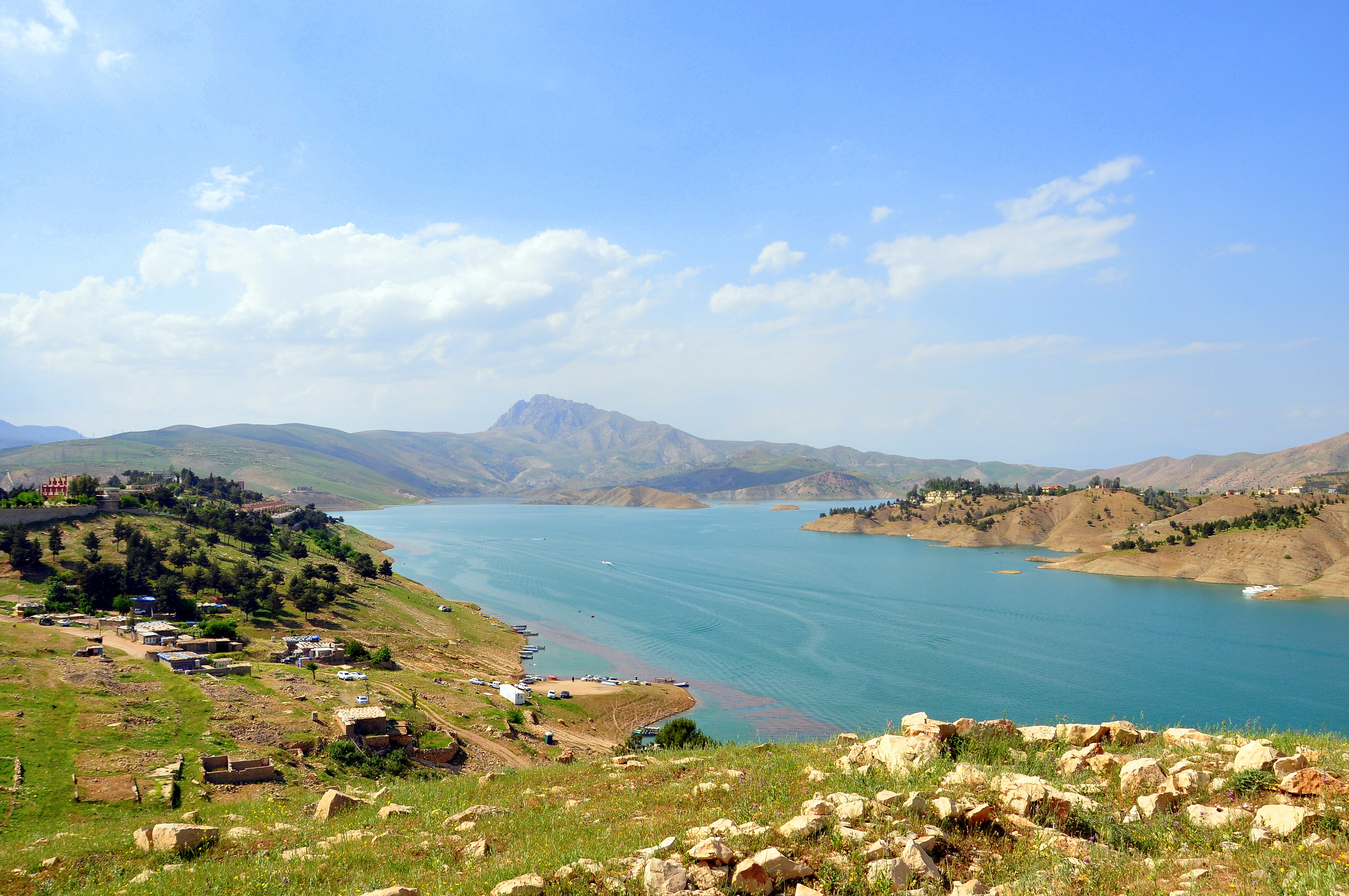
Spend an afternoon in one of the city's celebrated cafés, then take the hour's drive to Dukan Lake — the largest lake in the region — for boating, summer swimming and lakeside fish restaurants set against the mountains.
- •Sulaymaniyah has a genuinely strong café scene — lean into it.
- •Dukan Lake is about an hour away; an easy half- or full-day trip.
- •Swimming and boating are best in the warmer months.
- •See our dedicated Dukan Lake guide to plan the day in detail.
Book tours & activities in Sulaymaniyah
Browse guided tours, day trips and experiences in and around Sulaymaniyah on GetYourGuide, with free cancellation on most bookings.
Tour links are affiliate links to GetYourGuide. If you book through them we may earn a small commission, at no extra cost to you — it helps keep this independent guide free.
Where to stay
City centre
Staying centrally puts the museums, the Grand Bazaar and the best cafés within walking distance, which suits the city's slow, wander-and-sit rhythm.
Salim Street area
One of the main arteries lined with shops, restaurants and cafés — a convenient, lively base with plenty of dining within a short stroll.
Hotels for every budget
The city offers comfortable international and business hotels alongside a good range of mid-range and budget options, making it easy to match accommodation to your trip.
Find a place to stay in Sulaymaniyah
Compare hotels, guesthouses and apartments across Sulaymaniyah and book at the best available price.
Hotel links are affiliate links to Agoda. If you book through them we may earn a small commission, at no extra cost to you — it helps keep this independent guide free.
Pros & cons
Pros
- The region's cultural and intellectual hub, with excellent museums
- Famous, thriving cafe scene and a relaxed, open atmosphere
- Its own international airport (ISU)
- Close to Dukan Lake and dramatic mountain scenery
Cons
- Further from Erbil — around a three-hour drive over the mountains
- Fewer big-name international hotel chains than Erbil
- Summers are hot, though the elevation tempers it slightly
- Some key sites, like the Red Museum, are emotionally heavy
Tips for visiting
- Getting there: Sulaymaniyah has its own international airport (ISU), or it can be reached by a scenic three-hour drive from Erbil.
- Atmosphere: the city generally has a more relaxed, liberal vibe than other parts of the region.
- Allow time for the cafés — lingering over tea or coffee is a quintessential local experience.
- Combine the city with a day at Dukan Lake, about an hour away.
- Carry cash in Iraqi dinar; card acceptance is patchy outside larger venues.
From the blog
Frequently asked questions
Is Sulaymaniyah worth visiting?+
How do I get from Erbil to Sulaymaniyah?+
How many days should I spend in Sulaymaniyah?+
What is Sulaymaniyah known for?+
Is Sulaymaniyah safe for travellers?+
Plan the rest of your trip
Keep exploring the Kurdistan Region: see the best places to visit, browse things to do, read our Kurdistan travel tips and visa & entry guide, or find where to stay in Sulaymaniyah. Travelling on set dates? Check the Kurdistan events calendar.
VisitKurdistan.com is an independent travel guide and is not affiliated with any government tourism authority. Details can change over time — verify with local providers before travel.