Amadiyah · Amêdî
Amadiyah Guide
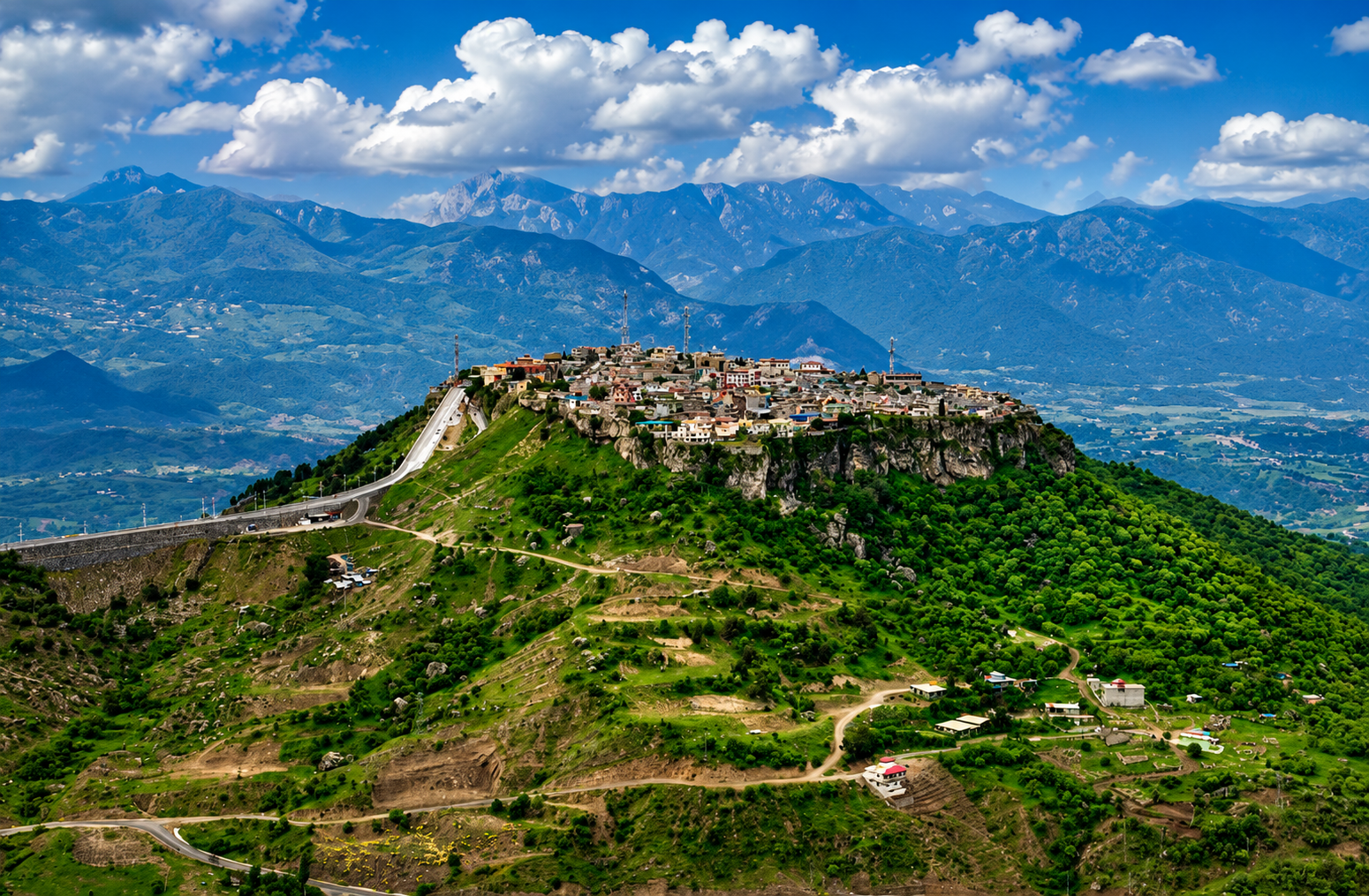
Also spelled Amedi, Amadiyah sits atop a sheer-sided mountain plateau, a tiny historic town with sweeping views and a history stretching back thousands of years.
A short history of Amadiyah
Amadiyah occupies one of the most dramatic settings of any town in the region — a near-level plateau on top of a steep-sided mountain rising above the surrounding valleys in the north of the Kurdistan Region of Iraq. The flat summit has been inhabited for thousands of years, its natural defences making it a stronghold long before written records of the town began.
Through the medieval period Amadiyah was the seat of a long-lived emirate and a meeting point of communities — Muslims, Christians and Jews lived side by side here for centuries, and traces of that mixed heritage survive in the town's gates, mosque and ruined synagogue. The carved Mosul Gate, with its weathered figures, is one of the few surviving entrances to what was once a fully walled town.
Today Amadiyah is a small, quiet place compared with its historic importance, home to only a few thousand residents. Its setting, ancient remains and panoramic views over the valleys have made it one of the most photographed and beloved spots in the Kurdistan Region.
Where is Amadiyah?
Why visit Amadiyah?
Amadiyah is for travellers drawn to dramatic landscapes and deep history. There are few places where a whole town sits on a flat mountaintop, ringed by cliffs and looking out over green valleys, and the approach by road — winding up toward the plateau — is an experience in itself.
It is small enough to explore on foot in a couple of hours, which makes it an ideal half-day trip from Duhok. Visitors come for the views, the ancient gates and the sense of a place where several faiths and peoples have left their mark over many centuries.
Things to do in Amadiyah
The Mosul Gate (Bahdinan Gate)
The best preserved of the town's ancient entrances, carved into the rock with weathered figures still visible above the archway. It is the most evocative reminder of Amadiyah's days as a fortified hilltop town reached only through guarded gates.
- •Look up for the carved figures flanking the arch — easy to miss.
- •A short walk from the plateau, so it pairs well with a town stroll.
- •Morning light tends to fall best on the stonework for photos.
- •Wear sturdy shoes, as the approach can be uneven.
Walk the plateau and viewpoints
The flat summit can be explored on foot, with viewpoints around the edge looking out over the valleys far below — especially beautiful in the soft light of early morning or late afternoon.
- •The whole town fits within a couple of hours of easy walking.
- •Sunrise and sunset give the most dramatic light over the valleys.
- •Stay back from unfenced cliff edges, particularly with children.
- •Bring a layer — it can be breezy and cool up on the plateau.
The Great Mosque and old quarter
Wander the narrow lanes of the old town to see the historic mosque with its minaret and the layered, lived-in character of a place built up over centuries by several communities.
- •Dress modestly and be respectful around the mosque and worshippers.
- •Ask before photographing people or entering any religious building.
- •The lanes are best simply wandered slowly, with no fixed route.
- •Combine it with the Mosul Gate, which is close by.
Sulav and the road up
The resort village of Sulav, on the slopes below, is a popular stop with seasonal waterfalls, tea houses and restaurants, and gives the classic view of the town silhouetted on its plateau.
- •The waterfalls are seasonal — fullest in spring, faint by late summer.
- •A favourite weekend spot for families, so expect crowds on holidays.
- •Tea houses make a relaxed stop on the way up or down.
- •Gives the postcard view of Amadiyah on its plateau.
Surrounding valleys and villages
The green valleys and mountain villages around Amadiyah are well worth a drive, offering scenery, orchards and a glimpse of rural life in the northern highlands.
- •A car or hired driver makes the scattered villages much easier to reach.
- •Spring and early summer are the greenest and most scenic.
- •Greet people warmly — rural hospitality here is genuine and generous.
- •Carry cash, as small villages rarely have card facilities.
Book tours & activities in Amadiyah
Browse guided tours, day trips and experiences in and around Amadiyah on GetYourGuide, with free cancellation on most bookings.
Tour links are affiliate links to GetYourGuide. If you book through them we may earn a small commission, at no extra cost to you — it helps keep this independent guide free.
Where to stay
Sulav resort area
The slopes below the town at Sulav have the closest cluster of guesthouses and seasonal places to stay, handy for an early start and the waterfall views.
Base in Duhok
Many travellers visit Amadiyah as a day trip from Duhok, around 1.5 to 2 hours away, where the choice of hotels is much wider.
Simple guesthouses
Accommodation in and immediately around Amadiyah is limited and mostly simple. If you want comfort or more options, plan to sleep in Duhok and visit during the day.
Pros & cons
Pros
- One of the most spectacular settings in the region — a town on a flat mountaintop
- Rich, layered history with ancient gates and a multi-faith past
- Compact and easy to explore on foot in a half-day
- Cool mountain air and superb valley views
Cons
- Very limited accommodation in the town itself
- Few facilities — best combined with a base in Duhok
- A car or driver is needed to get there and back
- Quiet out of season, with some places open mainly in warmer months
Tips for visiting
- Getting there: visit by car or driver from Duhok, around 1.5 to 2 hours through scenic mountain country.
- Combine Amadiyah with Sulav and the surrounding valleys to make a full day of it.
- Go early or late for the best light and the clearest views from the plateau edge.
- Pack layers — the elevation means it can be noticeably cooler than the lowlands, even in summer.
- Carry cash in Iraqi dinar, as card payment is rarely available in the town.
Frequently asked questions
What is Amadiyah known for?+
How do I get to Amadiyah?+
Is Amadiyah worth visiting?+
How long do I need in Amadiyah?+
Is Amadiyah safe to visit?+
Plan the rest of your trip
Keep exploring the Kurdistan Region: see the best places to visit, browse things to do, read our Kurdistan travel tips and visa & entry guide, or find where to stay. Travelling on set dates? Check the Kurdistan events calendar.
VisitKurdistan.com is an independent travel guide and is not affiliated with any government tourism authority. Details can change over time — verify with local providers before travel.