Lalish · Laliş
Lalish Guide
A tranquil mountain valley that is the holiest site of the Yazidi faith, home to ancient shrines, sacred springs and the distinctive fluted spires of its temple.
A short history of Lalish
Lalish lies in a quiet, green valley in the north of the Kurdistan Region of Iraq and is the holiest place of the Yazidi faith, one of the region's oldest religious communities. For Yazidis it is a place of pilgrimage that every believer aspires to visit, and it has been a sacred centre for many centuries.
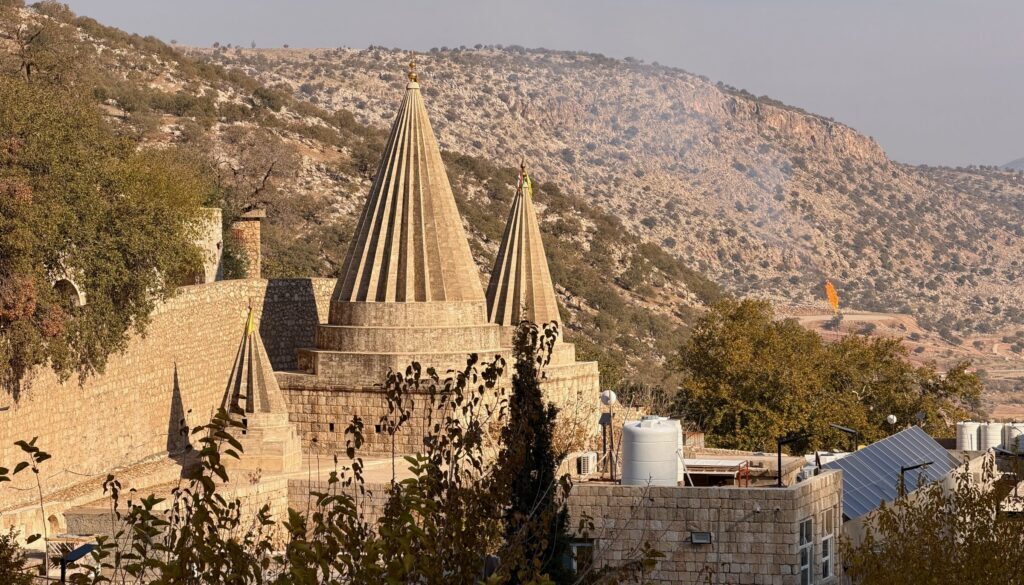
At the heart of the valley stands the temple complex, marked by its distinctive fluted, conical spires. Within and around it are the tomb of Sheikh Adi, a figure central to the faith, along with sacred springs, courtyards and chambers, each carrying deep religious meaning for the community.
Lalish has endured as the spiritual home of the Yazidis through long and often difficult history. Today it remains an active site of worship and pilgrimage, welcoming respectful visitors who come to learn about one of the region's distinctive living traditions.
Where is Lalish?
Why visit Lalish?
Lalish offers a window into a unique and ancient faith found in few other places on earth. The peaceful valley, the remarkable architecture of the temple and the sense of a living spiritual tradition make a visit quietly moving and unlike anywhere else in the region.
It is also a place that rewards visitors who come with curiosity and respect. Approached thoughtfully, a visit to Lalish is an opportunity to understand the Yazidi community and its beliefs, set in a beautiful and contemplative mountain landscape.
Things to do in Lalish
Visit the temple of Sheikh Adi
The central shrine, with its fluted conical spires, is the focus of the valley and the holiest site of the Yazidi faith. Visitors are welcomed to look respectfully; follow the customs explained on site, including the long-standing practice of entering the sacred areas barefoot.
- •You must remove your shoes before entering the sacred areas — go barefoot.
- •Take care not to step on the thresholds of doorways, a local custom.
- •Dress modestly out of respect for this active religious site.
- •Ask permission before photographing people or interiors.
See the sacred springs
Lalish has springs that hold deep religious significance for the Yazidi community, used in baptisms and rituals. Treat these areas with care and follow any guidance given by those at the site.
- •These are sacred waters, not for swimming or casual play.
- •Follow the guidance of guardians on what visitors may and may not do.
- •Keep voices low and movements calm around the springs.
- •Photography may be restricted — always ask first.
Walk the peaceful valley
The valley itself, with its trees, stone buildings and quiet courtyards, is beautiful and contemplative — a place to walk slowly and take in the atmosphere away from the bustle of the cities.
- •Wear socks you do not mind getting dusty, as much is walked barefoot.
- •Allow unhurried time — the valley rewards a slow, quiet pace.
- •Shaded courtyards offer welcome relief from the midday sun.
- •It is a place of worship first, so keep noise to a minimum.
Learn from local guardians
People connected to the site are often willing to share something of its meaning and the beliefs of the Yazidi faith. Listening respectfully is one of the most rewarding parts of a visit.
- •A respectful, curious attitude opens up the warmest conversations.
- •Ask before photographing anyone who speaks with you.
- •A small, genuine thank-you is always appreciated.
- •Avoid debating beliefs — come to listen and understand.
Observe ceremonies (if present)
At certain times the valley hosts religious gatherings and ceremonies. If you are fortunate enough to be present, observe quietly and never intrude; ask before taking part in or photographing anything.
- •Ceremonies follow the Yazidi religious calendar — timing varies year to year.
- •Hang back and watch quietly rather than joining uninvited.
- •Never photograph rituals without explicit permission.
- •Confirm any festival dates locally before planning a visit around them.
Book tours & activities in Lalish
Browse guided tours, day trips and experiences in and around Lalish on GetYourGuide, with free cancellation on most bookings.
Tour links are affiliate links to GetYourGuide. If you book through them we may earn a small commission, at no extra cost to you — it helps keep this independent guide free.
Where to stay
Base in Duhok
Lalish is most often visited as a day trip, and Duhok is the most convenient larger city to base yourself in, with the widest choice of hotels.
Nearby towns
Smaller towns in the surrounding area offer simpler accommodation for those who wish to stay closer, though options are limited.
A place for day visits
As an active religious site rather than a resort, Lalish is best experienced as a respectful day visit rather than somewhere to stay overnight.
Pros & cons
Pros
- A unique and moving insight into the ancient Yazidi faith
- Striking temple architecture in a peaceful green valley
- A living, active place of pilgrimage rather than a museum
- An easy and rewarding day trip from Duhok
Cons
- An active holy site requiring modest dress and respectful behaviour
- Visitors remove their shoes in sacred areas, as is the custom
- Limited facilities and little accommodation nearby
- A car or driver is needed to get there
Tips for visiting
- Getting there: visit by car or driver from Duhok, within about 1 to 1.5 hours.
- Dress modestly out of respect, covering shoulders and knees.
- Follow local custom and remove your shoes where required; watch what others do and ask if unsure.
- Always ask before photographing people, ceremonies or sensitive areas.
- Visit quietly and follow the guidance of those who care for the site — this is a place of worship, not a tourist attraction.
Frequently asked questions
What is Lalish?+
Can visitors go to Lalish?+
How do I get to Lalish?+
What should I wear to visit Lalish?+
Is Lalish worth visiting?+
Plan the rest of your trip
Keep exploring the Kurdistan Region: see the best places to visit, browse things to do, read our Kurdistan travel tips and visa & entry guide, or find where to stay. Travelling on set dates? Check the Kurdistan events calendar.
VisitKurdistan.com is an independent travel guide and is not affiliated with any government tourism authority. Details can change over time — verify with local providers before travel.