Airport Transfers in the Kurdistan Region of Iraq
Landing in Erbil or Sulaymaniyah and wondering how to reach your hotel? This guide walks you through every transfer option, what arrival is really like, and how to travel onward between the region's cities.
The first hour after you step off a plane sets the tone for an entire trip. Get your airport transfer right and you slide effortlessly from the arrivals hall into a comfortable car and on to your hotel, ready to enjoy the Kurdistan Region of Iraq. Get it wrong and you can find yourself tired, disoriented and haggling over a fare at midnight. The good news is that arriving here is far more straightforward than many first-time visitors expect, and with a little preparation the whole process is smooth and welcoming.
This page is a practical, independent guide to airport transfers across the Kurdistan Region. It covers the region's two main international gateways, the different ways to get from the terminal to your accommodation, how to organise transport before you fly, what to expect when you land, how costs generally work, and how to continue your journey between cities or up into the mountains. Whether you are visiting for business, to explore the bazaars and citadel of Erbil, or to base yourself somewhere quieter, the aim is to help you arrive relaxed and in control.
One quick note before we begin: airlines, routes, taxi systems, app availability and prices all change over time. We deliberately avoid quoting fixed fares or timetables, and we encourage you to confirm current details with your airline, hotel or transfer provider close to your travel date. Treat everything here as orientation, not a guarantee.
Airports in the Kurdistan Region
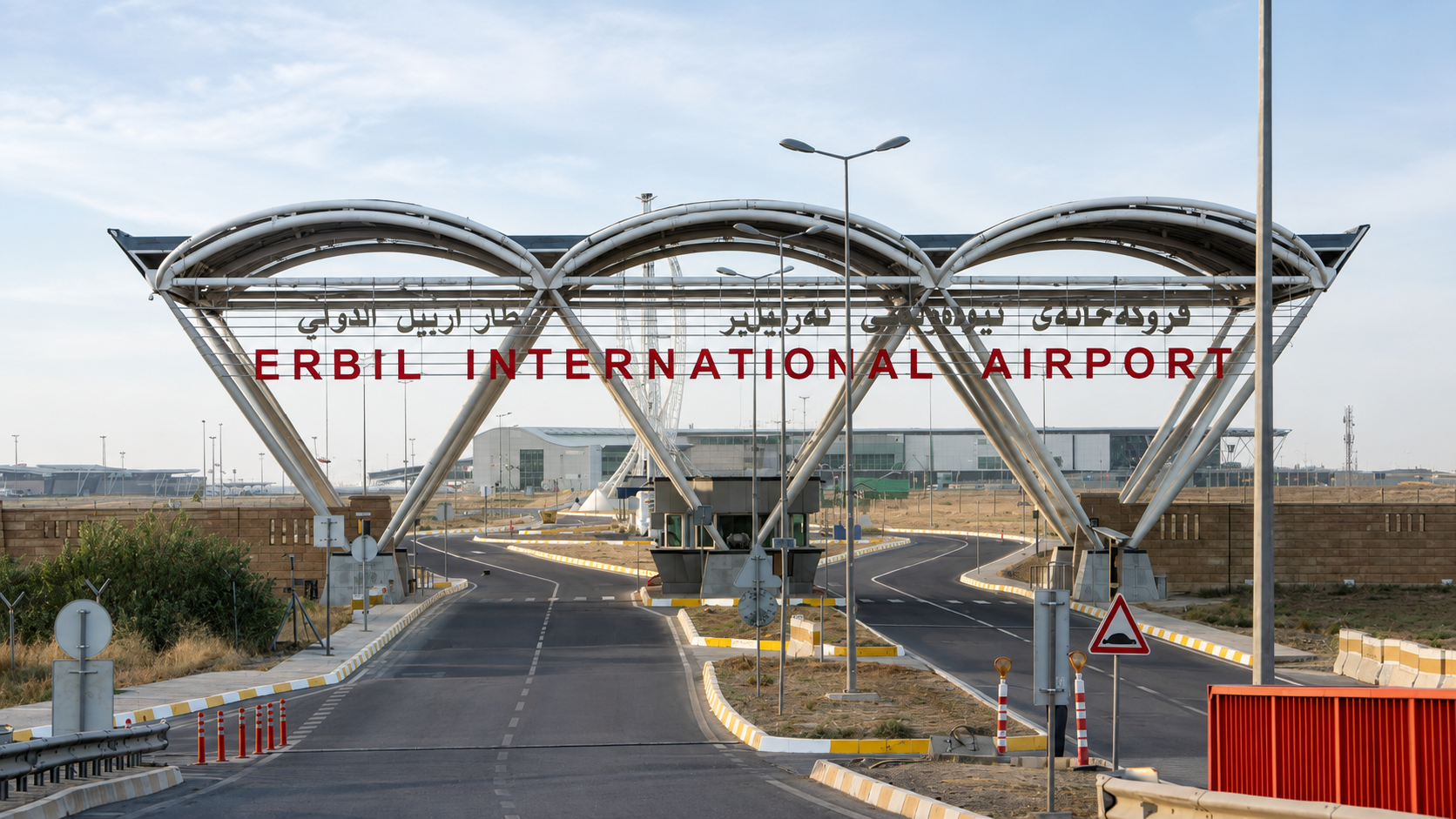
The Kurdistan Region is served by two main international airports, and knowing which one you are flying into shapes how you plan your transfer. Both are modern, well-organised gateways used by international airlines, business travellers and a growing number of tourists, and both are accustomed to welcoming visitors from around the world.
Erbil International Airport (EBL)
Erbil International Airport, often shown on tickets and screens with the code EBL, is the busiest gateway to the region and the one most visitors use. It sits a short drive from the centre of Erbil, the regional capital, which means transfers into the city are typically quick and easy. Because Erbil is the main hub, it also has the widest choice of transfer services, taxis and rental options, and it is the natural starting point for onward road journeys to Duhok, the mountains and beyond. If you are unsure which airport suits your itinerary, Erbil is usually the most flexible choice.
Sulaymaniyah International Airport (ISU)
Sulaymaniyah International Airport, code ISU, serves the city of Sulaymaniyah (also written Slemani) in the east of the region. It is a convenient entry point if your trip is focused on Sulaymaniyah, its lively café culture and museums, or the surrounding eastern landscapes and lakes such as Dukan. Like Erbil, it offers taxis and transfer options, and many hotels in the city can arrange a pickup. If your plans centre on the east, flying into Sulaymaniyah can save you a long road journey from Erbil.
What about Duhok?
Duhok, in the north of the region, does not have its own commercial international airport, so travellers heading there generally fly into Erbil and continue by road. This is a well-travelled route and easy to arrange, whether by private transfer, hired driver or rental car. We cover the Duhok journey in more detail further down the page.
Airlines, routes and the airports themselves update their services over time. Always check current flight options and any entry requirements with your airline and an official source before you travel.
Transfer options explained
There is no single "best" way to get from the airport to your hotel — the right choice depends on your budget, your arrival time, how much luggage you have and how confident you feel finding your own way. Here are the main options, with the trade-offs of each, so you can pick what suits you.
Private or hotel transfer
A driver meets you in arrivals, often holding a name board, and takes you directly to your hotel for an agreed price. This is the most relaxed option, especially for a first visit, a family, or a late arrival. Many hotels offer it if you send your flight details in advance, and dedicated transfer companies do the same. You pay a little more for the convenience and certainty.
Airport taxi
Official taxis wait at a rank outside arrivals and are a reliable, everyday way to get into the city. They are usually cheaper than a pre-booked private transfer. Agree the fare before you set off (or confirm the taxi uses a meter), have an idea of where your hotel is, and it helps to have the address written in Arabic or Kurdish or shown on a map on your phone.
Ride-hailing apps
Ride-hailing apps operate in the larger cities and let you see the fare in advance, which removes the need to negotiate. Set up and test any app before you fly, keep a local SIM or roaming data ready, and have a backup such as an official taxi in case app pickups from the terminal are limited. Coverage and rules can change, so do not rely on an app as your only plan.
Rental car pickup
If you intend to drive yourself, collecting a rental car at the airport lets you start exploring immediately. This suits confident drivers planning road trips into the mountains, but it is more to handle straight after a flight. See our Kurdistan car rental guide for licence, insurance and driving details, and confirm requirements before you travel.
Hired car with a driver
A popular middle ground is to hire a car together with a local driver, either just for the airport run or for your whole stay. You get the comfort of a private vehicle without the responsibility of driving, and a knowledgeable driver can help with directions, checkpoints and language. Agree the route, hours, waiting time and total cost up front.
Arranging a transfer in advance
For many visitors, the single best thing you can do is arrange your transfer before you fly. It removes uncertainty at the moment you are most tired and least familiar with your surroundings, and it means a fixed price agreed in calm conditions rather than on the spot. There are a few simple ways to do this.
The most common is to ask your hotel. When you book your room, send the property your full flight details — airline, flight number, date and arrival time — and ask whether they offer an airport pickup and what it costs. Plenty of hotels do, and having a driver waiting with your name is reassuring, particularly if you do not speak Kurdish or Arabic. Even if the hotel charges a little more than a street taxi, many travellers find the peace of mind worth it for the first journey.
Alternatively, you can use a dedicated transfer or tour company. These operators specialise in meet-and-greet airport service and can also handle onward or intercity trips. Confirm exactly where the driver will meet you, what the vehicle is, how to identify each other, and what happens if your flight is delayed. A clear plan for a delayed or changed flight is especially valuable on long-haul journeys with connections.
Whichever route you choose, share your contact details and ask for the driver's, keep a screenshot of your booking confirmation offline, and note down your hotel's address and phone number. A small amount of admin before departure prevents almost every common arrival headache.
Prices, availability and the services offered by hotels and transfer companies change frequently — always confirm current details directly with the provider before you rely on them.
What arrival is like & getting from the terminal
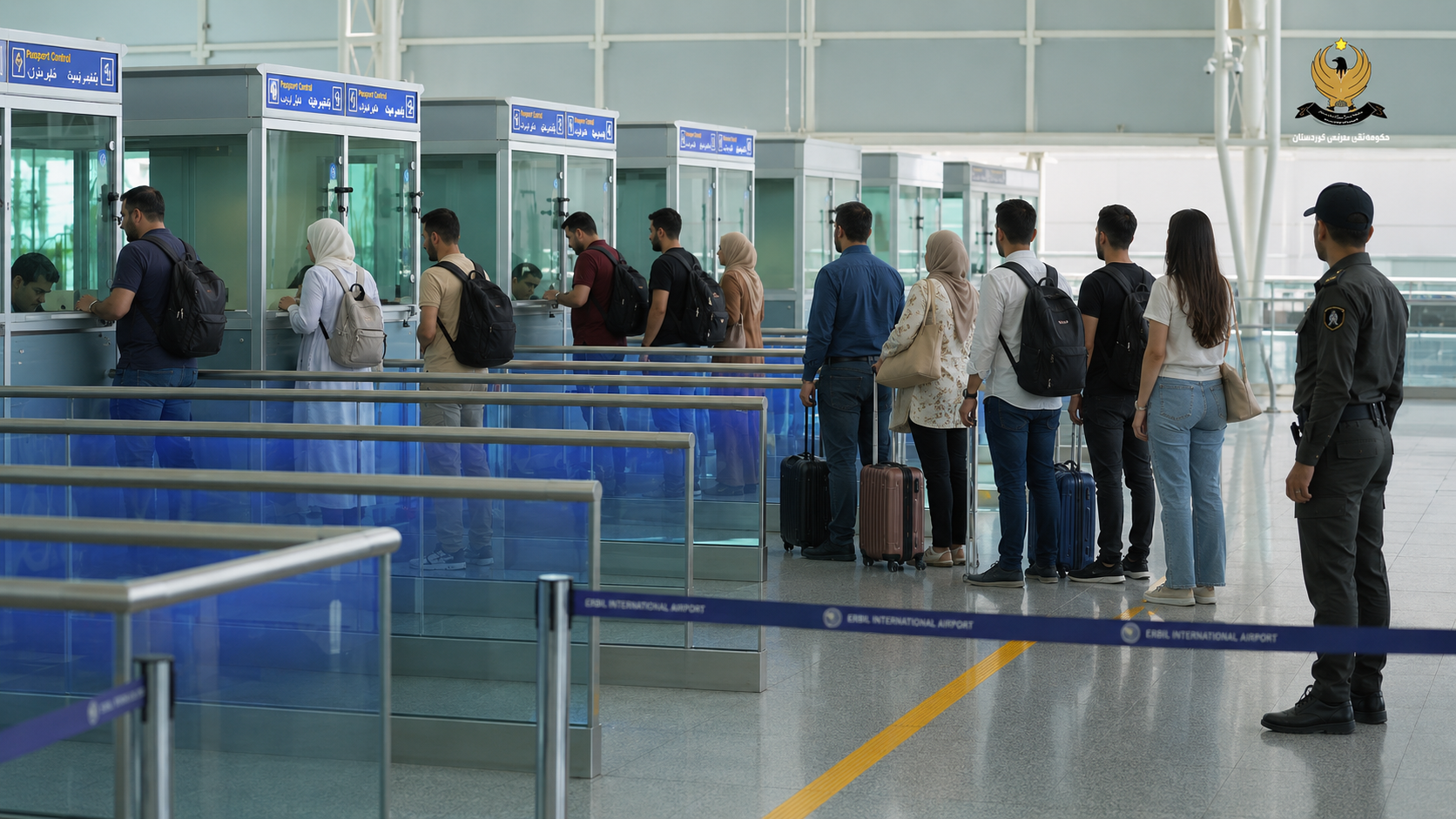
Knowing roughly what to expect after you land makes the whole experience calmer. After your flight, you will pass through passport control and any entry checks, collect your luggage, and move through into the arrivals area. Make sure your travel documents and any visa or entry paperwork are in order and easy to reach; for the latest rules, check our Kurdistan visa and entry guide and always verify requirements with an official source before you fly, as they can change.
Once you are through into arrivals, you will typically find the meeting point for pre-arranged transfers, the taxi rank, and signage directing you onward. If you have booked a private or hotel transfer, look for a driver holding a board with your name; if you cannot spot them immediately, wait near the exit and call the number on your booking. If you are taking a taxi, head to the official rank rather than accepting an unsolicited offer inside the hall, and confirm the fare or metered price before you load your bags.
At some airports there is a structure to how vehicles access the terminal, so a pickup may collect you from a designated nearby point rather than directly outside the door. Your transfer company or driver will explain this. The journey into the city is generally straightforward, and from Erbil's airport in particular the drive into the centre is short. Have your hotel's location ready on a map so you can follow the route and recognise when you have arrived.
Costs & what to expect
It is natural to want a clear price before you travel, but airport transfer costs in the Kurdistan Region depend on several factors, and they change over time, so it is more useful to understand what drives the price than to fix on a number. The main influences are the distance to your accommodation, the time of day, the type and size of vehicle, the amount of luggage, and whether you book a private transfer in advance or take a metered or rank taxi on arrival.
As a general guide, a transfer into the city centre is a relatively short, affordable journey — Erbil's airport in particular is close to town. A pre-booked private transfer with a meet-and-greet will usually cost more than a street or rank taxi, because you are paying for the convenience, the fixed price and the driver waiting for you. Larger vehicles for families or groups, and journeys at unusual hours, can cost more. Intercity transfers — for example to Duhok or Sulaymaniyah — cost considerably more than a city run because of the distance and time involved.
It is wise to carry some local cash for taxis and tips, as not every driver will take cards, and to ask whether a quoted price is per person or for the whole vehicle. If you are using a ride-hailing app, the estimated fare is shown before you confirm, which makes budgeting easier. Whatever option you choose, agree or confirm the price before you set off so there are no surprises at the other end.
We do not publish fixed fares because prices change frequently. Always confirm the current cost with your driver, hotel or transfer company before you travel.
Late-night & early-morning arrivals
Many international flights into the region land late at night or very early in the morning, so an unusual arrival time is completely normal. The airports operate around the clock and are used to receiving passengers at all hours, but arriving in the small hours is exactly when a little planning pays off most.
For an overnight arrival, a pre-booked transfer is the most comfortable choice by a wide margin. Knowing a named driver is waiting for you means you can walk straight through arrivals to a waiting car instead of looking for transport while exhausted. Official taxis are still available at the rank if you prefer to arrange transport on the spot, but there may be fewer of them and fewer staff around than during the day.
Tell your hotel your expected arrival time even if you are not using their transfer, so reception knows to expect you and your room is ready. Keep your booking confirmation, hotel address and a charged phone within easy reach, and have some local cash on hand. With those basics sorted, a late arrival is nothing to worry about.
Travelling onward between cities
Airport transfers are not only about reaching your first hotel — many visitors also need to move between the region's cities during their trip. The main centres of Erbil, Sulaymaniyah and Duhok are connected by road, and the same companies and drivers who handle airport pickups can usually arrange these intercity journeys too.
You can travel between cities by hiring a private car with a driver, which is comfortable and lets you set your own pace and stops; by shared or private taxi, which is a common local way to cover these routes; or by renting a car and driving yourself if you are confident on the region's roads. Each city journey takes a few hours depending on the route and any checkpoints, so plan your day with some buffer and confirm current road conditions before you set off.
If you are building a multi-city itinerary, it can be efficient to fly into one airport and out of another, or to combine your transfers into a single arrangement with one driver or operator. For deeper detail on self-driving, see our car rental guide, and for ideas on where to go and how to string destinations together, the first-time visitors guide and our travel tips are good starting points.
Reaching Duhok and the north
Because Duhok does not have its own commercial international airport, reaching it is a transfer question in its own right. The standard approach is to fly into Erbil International Airport and continue north by road. This is a well-established journey and easy to organise, so do not let the lack of a local airport put you off including Duhok in your plans.
You can cover the Erbil-to-Duhok route by pre-arranged private transfer, by hiring a car with a driver, by shared or private taxi, or by driving a rental car yourself. A private transfer or hired driver is the most comfortable, especially with luggage after a flight, and lets you relax and enjoy the changing scenery as you head into the northern part of the region. The drive takes a few hours, and you may pass through checkpoints along the way, which is routine — keep your documents accessible.
From Duhok you are well placed to explore northern highlights such as the sacred valley of Lalish and the dramatic hilltop town of Amadiyah. Arrange your onward transport and confirm timings and road conditions with your driver or hotel before you set out.
Tips for a smooth transfer
A few simple habits make the difference between a stressful arrival and a seamless one. Keep these in mind as you plan and as you land.
- Book ahead for your first journey. A pre-arranged transfer takes the pressure off when you are tired and unfamiliar with the surroundings.
- Share your flight details. Give your hotel or transfer company your airline, flight number and arrival time, and agree what happens if the flight is delayed.
- Confirm the price first. Agree the fare with a taxi driver, or check the app or meter price, before you set off — and ask if it is per person or per car.
- Carry local cash. Not every driver accepts cards, and small notes are handy for fares and tips.
- Have your hotel details ready. Keep the name, address and phone number on your phone, ideally with the location pinned on a map, and a written copy as backup.
- Set up connectivity. Arrange a local SIM or roaming and install any ride-hailing or map apps before you fly, with an offline backup plan.
- Use official taxis. Head to the marked rank rather than accepting unsolicited offers inside the terminal.
- Keep documents accessible. You may pass checkpoints on longer or intercity journeys; have your passport and paperwork within easy reach.
Transfer services, app coverage, taxi systems and prices change over time. Confirm current arrangements with your provider and check any entry or travel rules with an official source before you go.
Manual provider match
Need a transfer or a driver?
Tell us the route and timing you need. We can record your request for a manual provider match when a suitable verified provider becomes available.
We do not take payment, promise availability, or share your request with an unverified provider. A manual review is required before any introduction.
Frequently asked questions
Which airports serve the Kurdistan Region of Iraq?+
What is the best way to get from the airport to my hotel?+
Should I arrange my airport transfer before I travel?+
How much does an airport transfer cost in the Kurdistan Region?+
Are ride-hailing apps available at the airports?+
How do I get to Duhok if it has no international airport?+
Is it safe to arrive late at night?+
Can a transfer driver take me between cities as well?+
Keep exploring
Once your transfer is sorted, plan the rest of your trip. If you would rather drive yourself, read our Kurdistan car rental guide. Sort your entry paperwork with the visa and entry guide, get oriented with the first-time visitors guide, and pick up practical advice in our travel tips. You can also find a place to stay through our where to stay guide.
Get featured on VisitKurdistan.com
We are building a free business directory to connect travellers with the people who make trips to the Kurdistan Region of Iraq run smoothly. If you run a hotel, resort, tour company, restaurant, travel agency, car rental firm or adventure experience, you will soon be able to list your business here and reach visitors planning their trip.
Directory categories
Register your interest
The directory is not public yet. We verify submissions, record corrections and claims, label any sponsored or affiliate-supported relationship, and expire records that cannot be kept current. We never sell placement or present a listing as a review or recommendation.
VisitKurdistan.com is an independent travel guide. Listings will be clearly marked and are not endorsements; we are not affiliated with any government tourism board or official authority.
VisitKurdistan.com is an independent travel guide and is not affiliated with any government tourism board or official tourism authority. Prices, availability, opening hours, entry rules and seasonal access change frequently — always verify current details with an official or local source before you travel.