Kurdish Food Festivals
Dolma, biryani, kebab and the full richness of Kurdish cuisine
Date
Spring & Autumn 2026
Time
Typically midday to late evening
Location
Bazaars and public squares across the region
Overview
Kurdish cuisine is one of the great culinary traditions of the wider region, built on fresh mountain herbs, dairy from highland flocks, charcoal-grilled meats, slow-cooked rice and a deep repertoire of pastries and preserves. Food festivals across the Kurdistan Region of Iraq are the single best way to explore its full breadth in one place — a chance to graze through dozens of dishes that you would otherwise need weeks of home invitations to taste. For a visitor, a festival compresses the generosity of an entire culture into an afternoon of grazing, smelling, sampling and chatting with the people who cooked the food.
Most festivals are organised around clusters of stalls, each run by a family kitchen, a restaurant, a cooperative of cooks from a particular town, or a producer bringing honey, cheese or dried fruit down from the mountains. You buy small portions dish by dish, which is exactly what makes the format so rewarding: instead of committing to one large meal, you build your own tasting menu and keep moving. Plates are designed for sharing, so travelling in a small group lets you order widely and split everything.
What to eat
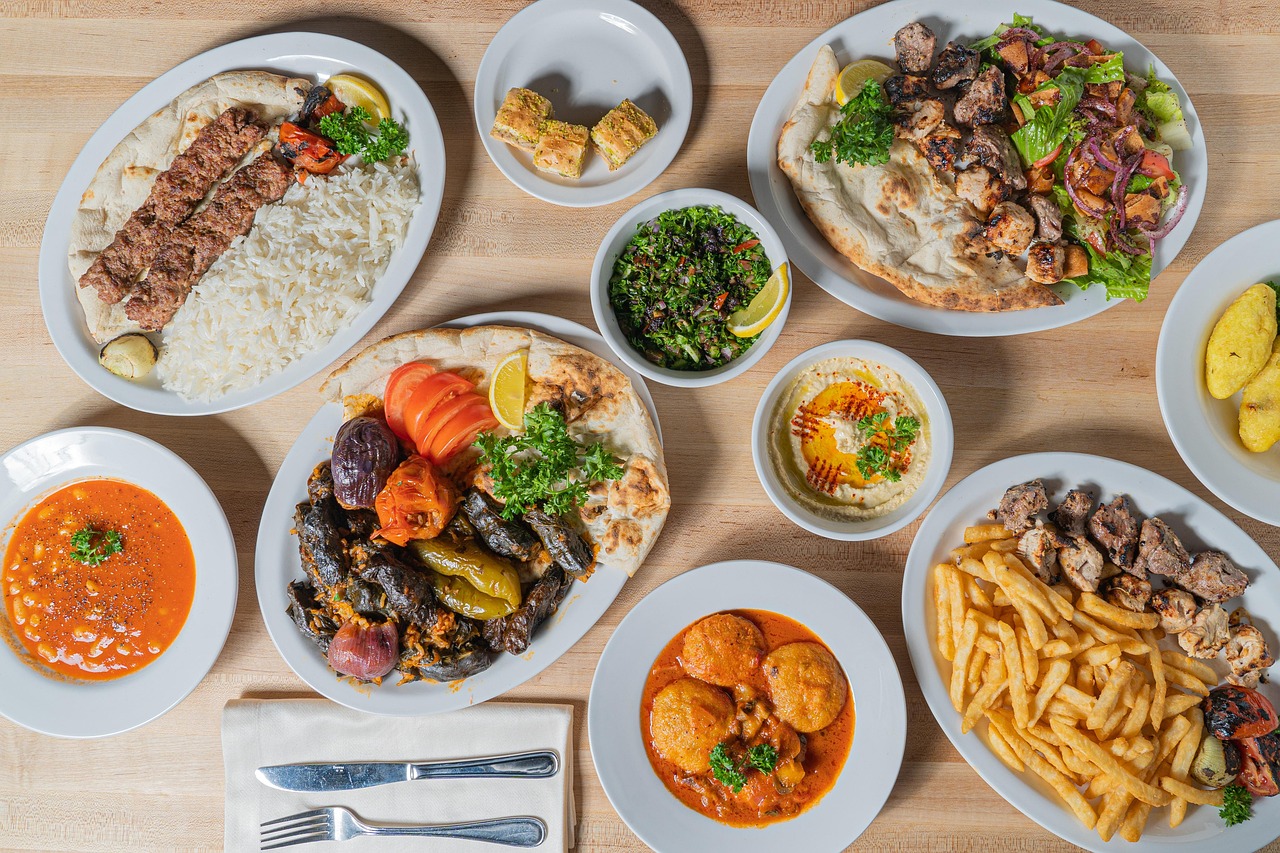
- →Dolma — vine leaves, peppers, onions and courgettes stuffed with spiced rice and meat, simmered until meltingly soft and often served with a tangy pomegranate or lemon finish
- →Kurdish biryani — rice layered with meat, raisins, slivered almonds and golden fried onions, fragrant rather than fiery
- →Tikka and kofta — charcoal-grilled lamb and chicken skewers and seasoned minced-meat kebabs, smoky from the open grill
- →Klêcha — the iconic Kurdish pastry filled with dates or walnuts and warmly spiced, the sweet most associated with celebration
- →Ayran and doogh — cooling soured-milk drinks, sometimes flavoured with dried mint, that balance rich and spiced dishes
- →Kurdish cheeses — fresh white cheeses, braided string cheese and herb-flecked varieties from the mountain regions
- →Yaprakh, kubba and shifta — stuffed rolls, bulgur-and-meat dumplings and flat spiced patties that reward the curious eater
- →Seasonal sweets and preserves — fruit leathers, walnut-stuffed treats, honey and grape molasses (dûshaw)
Regional variety
One of the joys of a festival is tasting the regional dialects of the cuisine side by side. Sulaymaniyah cooking tends to be more refined and lightly spiced, with a strong café and dessert culture behind it. Erbil leans heartier and more generous with grilled meats and rice. The northern districts around Duhok and Zakho show clear Turkish and Levantine influence in their breads, kebabs and use of spice. Bringing these traditions into one square means you can compare, contrast and decide for yourself which corner of the region speaks to your palate.
More than food
Expect far more than eating. Cooking demonstrations let you watch dolma being rolled at speed or biryani being layered and turned out of the pot. Live music — often the lilting sound of traditional Kurdish instruments — gives the squares a celebratory hum, and you may see circles of dancers forming the chain dance known as govend or halparke. Above all, expect warmth: hospitality is not a marketing slogan here but a genuine social value, and stallholders will frequently press an extra sample on you simply because you showed interest. Go hungry, go curious, and go ready to talk — portions are generous and the welcome is boundless.
History & significance
A cuisine of the mountains
Kurdish food grew directly from the rhythms of highland life. For centuries, communities across the mountains and plains relied on dairy from their own flocks, wild herbs and greens gathered in spring, grains and rice as everyday staples, and slow cooking methods suited to large family gatherings rather than quick individual meals. The result is a cuisine that prizes patience, freshness and abundance. Hospitality — the act of feeding guests generously, and of treating a stranger as a guest — sits at the very heart of the culture, and food is its most fluent language.
Tradition passed down
For generations, recipes and techniques were handed down at home rather than written in books, learned by watching and helping rather than by reading. Festivals and family celebrations were the great showcases where a household's cooking was put on display: weddings, religious holidays and the Newroz spring celebration all revolve around food. Modern food festivals formalise and open up this tradition, giving accomplished home cooks a public stage and giving visitors a respectful doorway into a cuisine that was once accessible only through a personal invitation.
A growing scene
As travel and the restaurant scene have grown across the Kurdistan Region, organised food festivals have multiplied in number and ambition. They now celebrate both humble everyday dishes and prized regional specialities, and increasingly they double as a way of documenting a living food culture — recording the techniques of older cooks, encouraging younger generations to keep them alive, and introducing the cuisine to international guests. Many events are run by local cultural associations, neighbourhood cooperatives or municipal teams rather than any national tourism authority, which gives them a grassroots, community-led character. Because they are organised year by year, dates and formats shift; treat any schedule you see as provisional and subject to change — verify with the organiser before travel.
Highlights
Visitor information
How to find festivals
Food events cluster in two broad windows: spring, when fresh produce, herbs and dairy are at their best, and autumn, when the focus shifts to harvest produce and preserved and slow-cooked dishes. Because organisers are often local cultural groups or municipalities, there is rarely a single national calendar; the most reliable approach is to ask at your hotel reception, talk to restaurant owners, and follow the social media pages of the city you are visiting. Listings can appear only a week or two ahead, so stay flexible. Any dates you find are subject to change — verify with the organiser before travel.
What to bring and wear
- →Cash in small denominations, as most stalls are cash-only and prices per dish are low
- →Comfortable shoes for standing and wandering across busy squares
- →A light layer for spring and autumn evenings, which can cool quickly after sunset
- →Hand wipes or sanitiser, since much of the eating is hands-on
- →A reusable bag if you plan to buy honey, cheese, nuts or sweets to take home
Tips for enjoying
- →Arrive genuinely hungry and pace yourself — buy small portions and keep moving rather than filling up at the first stall
- →Try the soured-milk drinks (ayran and doogh) to cool and balance the spiced and grilled dishes
- →Save room for klêcha and the other sweets, which are often the highlight
- →Vegetarians are well catered for, from meat-free dolma to cheeses, salads, herbs and pastries
- →Strike up conversations; stallholders are usually delighted to explain a dish and may offer you a free taste
Accessibility and family notes
Festivals held in open squares are generally flat and pushchair- and wheelchair-friendly, though crowds at peak times around early evening can make movement slow. Covered bazaar settings may have uneven stone underfoot. The atmosphere is family-oriented and child-friendly, with mild flavours that suit younger eaters and plenty of sweets to keep them happy.
How to get there
Food festivals appear in all three of the main cities — Erbil, Sulaymaniyah and Duhok — usually staged in central bazaars, public squares and parks. Erbil International Airport (EBL) and Sulaymaniyah International Airport (ISU) both handle international flights, making either a practical entry point for visitors flying in.
Within each city, festival sites are easy to reach by metered taxi or by ride-hailing apps, which are widely used and inexpensive. Many central festivals are also within walking distance of city-centre hotels, particularly in Erbil where events cluster near the Citadel and Qaysari Bazaar. If you are touring the region, frequent shared taxis link the major cities — Erbil to Sulaymaniyah takes roughly three to three and a half hours, and Erbil to Duhok around two and a half hours — so it is realistic to sample regional differences across a single trip. Roads between the cities are good, and the mountain scenery en route is an attraction in itself.
A sensible plan is to base yourself in one city for a festival, then add a day trip or onward leg to taste another region's cooking. Confirm specific dates, opening hours and exact venues locally on arrival, as these details are frequently finalised close to the event and are subject to change — verify with the organiser before travel.
Practical information
Best hotels nearby
Erbil city-centre hotels
Erbil
Stay near the Qaysari Bazaar and Citadel, close to where many of Erbil's food events are held.
Sulaymaniyah hotels
Sulaymaniyah
Handy for the city's famous café and food scene and its central bazaar events.
Duhok hotels
Duhok
A base for sampling the Turkish-influenced cooking of the northern districts.
Plan your visit
Frequently asked questions
What food should I try at a Kurdish food festival?+
When are food festivals held?+
Are these festivals good for vegetarians?+
How much do they cost?+
Where are the best food festivals?+
Related events
All events →Traditional Cooking Events
Cooking demonstrations and workshops across the Kurdistan Region reveal the techniques behind classic dishes — from rolling dolma to layering biryani and baking klêcha.
Spring & Summer 2026
Sulaymaniyah and cultural venues across the region
Local Market Events
The Kurdistan Region's markets — from Erbil's historic Qaysari Bazaar to seasonal farmers' markets — are living events in their own right, full of produce, spices, crafts and local life.
Year-round 2026
Qaysari Bazaar (Erbil) and markets across the region
VisitKurdistan.com is an independent travel guide and is not affiliated with any government tourism authority. Event details are subject to change — always verify with the organiser before travel.