Kurdish Dance Festivals
Halparke and govend — the circle dance that binds communities
Date
Summer 2026
Time
Afternoon and evening
Location
Erbil and venues across the region
Overview
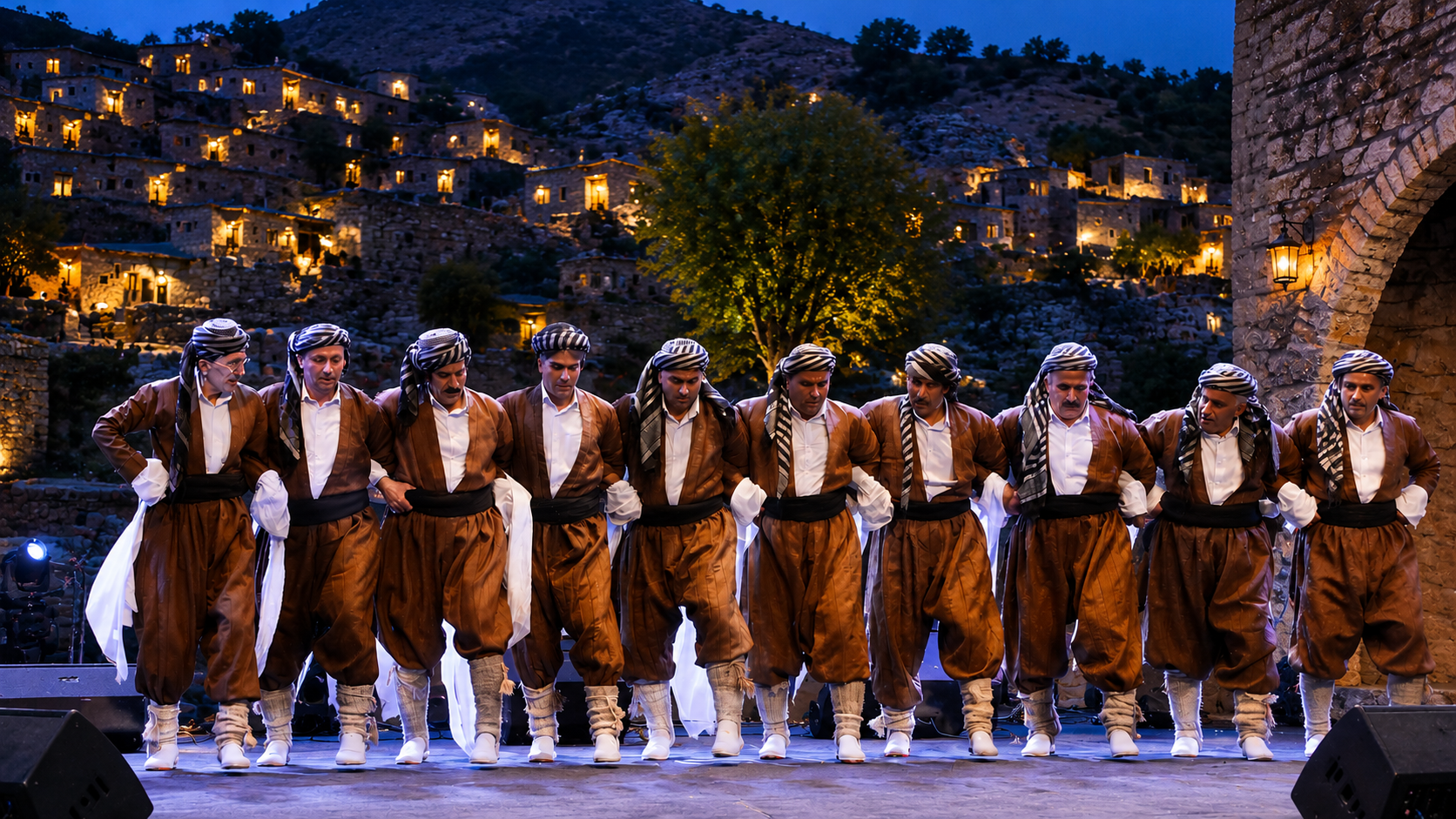
Few things capture the spirit of the Kurdistan Region of Iraq like the *halparke* (also called *govend*) — the line-and-circle dance performed at weddings, festivals and gatherings across the Kurdish world. Dance festivals celebrate this tradition with performances, group dancing, and displays of regional style and costume, but the dance is so woven into daily life that you are just as likely to encounter it at a roadside wedding party or a family picnic. For a visitor, joining a halparke line is often the single moment a trip to the region truly clicks — the point where you stop being a spectator and become, however briefly, part of the celebration.
The appeal is its openness. There are no auditions and no wrong way to start; you simply take a hand at the end of the line and follow. Within a few minutes most people have the basic step, and within a song they are grinning.
How the dance works
Dancers link little fingers, clasp hands or rest hands on shoulders, forming long lines and circles that move with synchronised steps — usually a pattern of steps and gentle bounces that travels sideways. A leader at the end of the line, the *sergovend*, often waves a colourful scarf, setting the tempo and adding flourishes such as shoulder shimmies and stamps. The energy builds with the drums until the whole gathering is swept up, and a single line can grow until it snakes right around a hall or field.
Regional variety
There are many regional variations in step, speed and style across the Kurdistan Region — some slow and stately, others fast and athletic. Festivals are a wonderful place to see these differences side by side, performed by groups in the embroidered dress of their particular area, each with its own colours, patterns and accessories. Watching how a step changes from one valley's tradition to the next is a quiet lesson in just how varied Kurdish culture is.
The music that drives it
Halparke is inseparable from its music, typically the thunderous *dahol* drum paired with the piercing *zurna* horn, whose interplay sets the rhythm and signals changes in tempo. At larger festivals you may also hear amplified bands and singers, but the core drum-and-horn sound is what makes feet move.
A dance for everyone
Crucially, halparke is participatory. At festivals — and at almost any Kurdish celebration — visitors are pulled into the line and taught the steps on the spot, often by laughing strangers who become friends by the end of the song. It is one of the warmest, most immediate ways to experience Kurdish hospitality, and refusing an invitation to join is far more awkward than simply having a go.
A simple plan
Arrive in the late afternoon to watch the staged troupe performances while the light is good for photos, then stay into the evening when the open dancing begins and the crowd's energy peaks. Eat from the food stalls, accept the tea you will inevitably be offered, and say yes when someone reaches out a hand.
History & significance
Older than memory
Circle and line dancing has accompanied Kurdish community life for centuries, marking the turning of seasons, harvests, weddings and victories, as well as moments of mourning and solidarity. The dance's communal form — everyone linked, moving as one, no single performer elevated above the rest — mirrors the social bonds it celebrates, which is part of why it has endured so strongly.
Dress and identity
Traditional dance is performed in regional costume: women in long, brightly coloured embroidered gowns with sashes, headscarves and jewellery, men in the *shal u shapik* with a wide cummerbund. These costumes are themselves an expression of local identity, signalling which area or community a group comes from, and festivals deliberately showcase their variety as a celebration of that diversity.
A symbol carried through hardship
Like much of Kurdish culture, communal dance took on added meaning during eras when Kurdish identity was discouraged. To dance together in traditional dress was, and remains, a quiet affirmation of belonging. That history gives even a joyful wedding dance an undercurrent of pride and continuity.
Keeping the steps alive
Today, cultural troupes and folklore groups across the region rehearse and perform traditional dances, teaching them to younger generations through clubs, schools and community associations. Dance festivals give these groups a stage, encourage friendly comparison between regional styles, and keep the tradition vibrant and visible rather than confined to family occasions.
Highlights
Visitor information
What to expect
Dance festivals combine staged performances by costumed troupes with open dancing that anyone can join. The mood is celebratory, family-friendly and inclusive, with food stalls, music and a holiday atmosphere. No experience is needed — the steps are simple to pick up once you're in the line, and your neighbours will guide you.
What to wear and bring
Wear comfortable, modest clothing and, above all, shoes you can move in, as you may end up dancing for far longer than you expect. Late spring and summer days are hot, so bring water, sun protection and a hat for daytime events, and a light layer for cooler evenings. Carry small cash for food and transport, as cards are rarely accepted at informal gatherings.
Accessibility and families
Children are welcome and everywhere, and the participatory nature of the dance suits all ages. Venues range from level city parks and halls (reasonably accessible) to outdoor sites with uneven ground; if mobility is a concern, ask your hotel about the specific venue, and remember you can enjoy the music and watch from the side without joining the line.
Tips
- →Don't be shy about joining; being invited in is part of the experience, and politely declining repeatedly can seem standoffish
- →Watch the line leader for cues on tempo, direction and when steps change
- →Start near the middle or back of the line rather than the leader's end, where the steps are simplest
- →Stay into the evening, when energy and crowds peak and the best dancing happens
- →Always ask before photographing individuals, particularly women and elders
How to get there
Erbil is the most common hub for large dance events and is served by Erbil International Airport (EBL), with the city centre a short, inexpensive taxi ride away. Many nationalities can obtain a visa on arrival for the Kurdistan Region, but rules change, so confirm current entry requirements before you fly.
By road, Erbil connects to Sulaymaniyah (around 3–3.5 hours) and Duhok (around 2.5 hours) via good highways, with frequent shared taxis (known locally as *garage* taxis) running between the cities alongside private-car options. Within Erbil, taxis and ride-hailing apps reach venues easily and cheaply, which is useful for evening events that end after public transport has thinned out.
If a festival is held in another city or town, confirm the venue and date locally and arrange transport ahead of time, as exact programmes and dates vary year to year and are subject to change — verify with the organiser before travel. Hiring a car and driver for the day or evening is the most flexible option for out-of-town events and lets you combine the festival with nearby sights such as Erbil's Citadel and bazaar.
Practical information
Best hotels nearby
Erbil city-centre hotels
Erbil
International-standard hotels near the Citadel, well placed for the region's main dance events.
Ankawa district hotels
Erbil
A lively district with plenty of dining and a good range of hotels a short ride from city venues.
Sulaymaniyah hotels
Sulaymaniyah
A cultural-capital base if you are following dance and music events across the region.
Plan your visit
Frequently asked questions
What is halparke?+
Can visitors join the dancing?+
Where are dance festivals held?+
When is the best time to see Kurdish dance?+
What should I wear?+
Related events
All events →VisitKurdistan.com is an independent travel guide and is not affiliated with any government tourism authority. Event details are subject to change — always verify with the organiser before travel.