Hiking Festivals
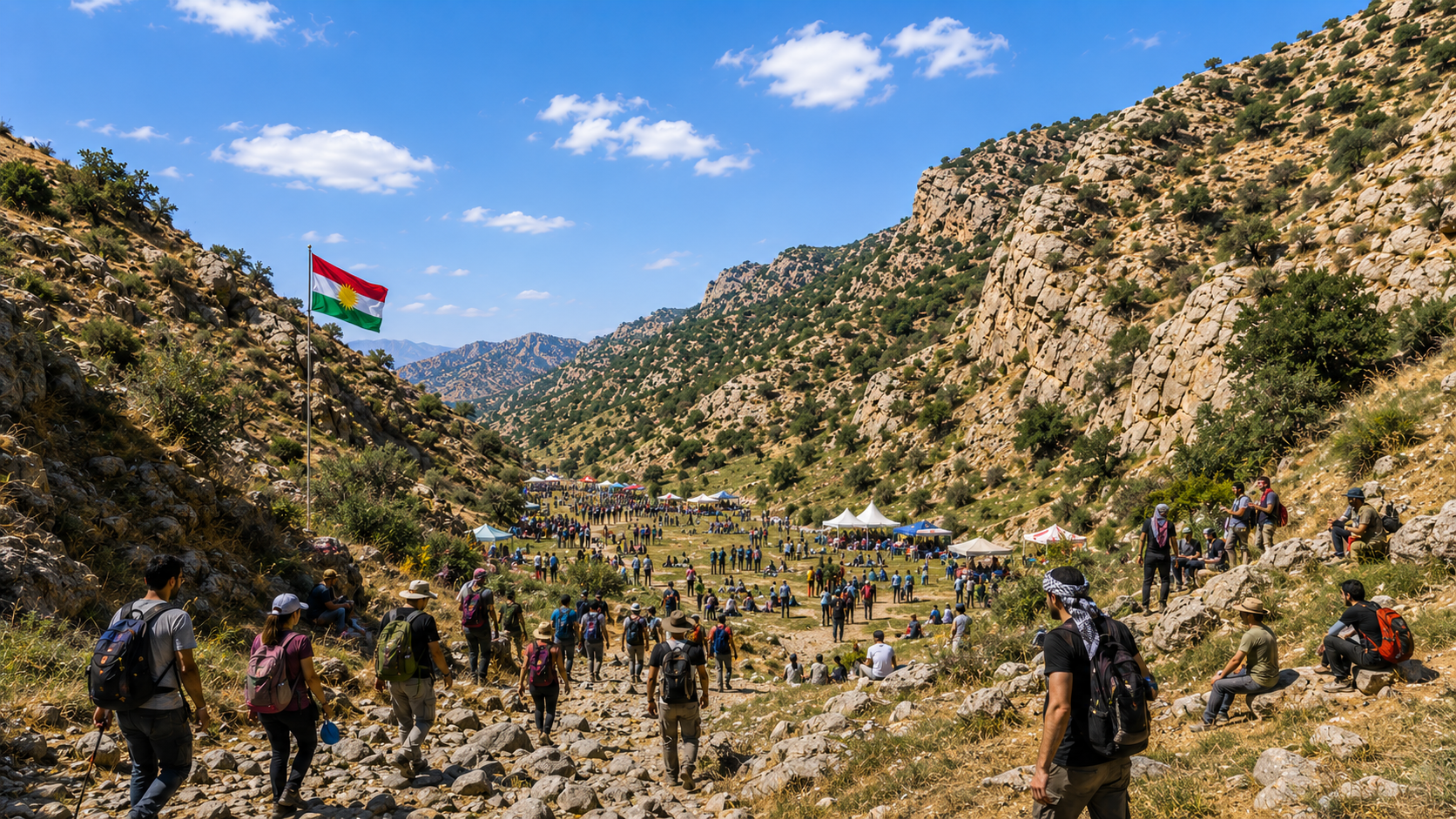
Group treks across the Zagros, from valley walks to Halgurd
Date
Spring & Autumn 2026
Time
Early starts recommended
Location
Zagros mountains across Erbil, Sulaymaniyah and Duhok Governorates
Dates need organiser confirmation
This is an editorial listing based on seasonal or recurring information; no current organiser verification is recorded. Event programmes, venues and times can change — check before making travel plans.
Overview
The Kurdistan Region of Iraq holds some of the most spectacular mountain terrain anywhere in the wider Middle East, and hiking has become one of the most rewarding ways to experience it. The Zagros range — rising past 3,600 metres along the eastern and northern frontiers — folds into green valleys, wildflower meadows, dramatic limestone gorges and long, open ridgelines that seem to roll toward the horizon. For decades these mountains were known mainly through stories of resilience and refuge; today they are increasingly a place of recreation, and a network of seasonal hiking festivals and organised group treks has made them genuinely accessible to visitors who arrive with curiosity and a reasonable level of fitness.
What makes hiking here distinctive is the contrast packed into short distances. You can spend a gentle morning beside a river running clear with snowmelt, then look up at snow lingering on summits well into the warm months. Villages of stone and orchard sit in folds of the hills, and shepherds still move flocks to high pasture in a rhythm that has shaped these slopes for centuries. The light is exceptional — sharp and clean at altitude — and the sense of space is the opposite of the crowded, ticketed trails found in better-known mountain regions.
Key hiking areas
- →Halgurd (3,607m) — Iraq's highest peak, near Choman; a strenuous full-day ascent with no technical climbing but real fitness, an early start and ideally a guide required
- →Rawanduz Gorge — accessible river-level trails threading through towering limestone walls, with waterfalls and shaded picnic spots along the way
- →Barzan Valley — lush, orchard-rich valley walking that is especially beautiful in blossom season
- →Choman and the high country — alpine meadows ablaze with wildflowers in late spring, and the launch point for the biggest peaks
- →Bekhal and Jundian — popular waterfall walks that suit families and casual walkers
- →Akoyan and the Hamilton Road country — high passes and viewpoints along one of the region's most famous mountain drives
The season
The best hiking runs in two windows. Spring (April–June) brings green hillsides, carpets of wildflowers and flowing streams, though high routes may still hold snow into May. Autumn (September–October) delivers golden light, stable clear skies and cooler walking, with the added bonus of orchard harvests in the valleys. High summer is hot and hazy at low altitude but perfectly pleasant on the higher routes, where group treks often start before dawn to make the most of the cool morning air. Winter belongs to snow, when only experienced, equipped parties should venture onto the heights.
Organised groups and festivals
Several hiking groups based in Erbil, Sulaymaniyah and Duhok run regular weekend treks throughout the season and announce their routes and meeting points on social media. Larger seasonal hiking festivals — informal gatherings that bring dozens of walkers together for a marquee route such as Halgurd or a scenic valley loop — appear at various points in spring and autumn. Exact dates shift year to year and are subject to change, so verify with the organiser before travel. For visitors, joining one of these groups is an excellent, safe and sociable way to explore, giving you local knowledge, shared transport to remote trailheads and instant company over the inevitable mid-walk glass of tea.
History & significance
Mountains in the Kurdish soul
The well-known phrase "no friends but the mountains" captures how central the highlands are to Kurdish identity and history. For generations the mountains were refuge, home, larder and symbol — places of safety in difficult times and the backdrop to countless songs, poems and family memories. To walk these ridgelines today is to move through a landscape that carries deep cultural weight, and many local hikers describe heading uphill as a kind of homecoming rather than simply a sport.
A young but fast-growing hiking culture
Organised, recreational hiking is a relatively recent phenomenon. As the security situation stabilised and a new generation grew curious about their own backyard, informal clubs began forming in the main cities, sharing routes, swapping kit and gradually building the knowledge needed to tackle bigger objectives. From a handful of enthusiasts the scene has grown into a regular weekend fixture, with photographers, families and first-time walkers all drawn in. Hiking festivals and group treks emerged directly from this grassroots enthusiasm rather than from any official programme.
Old paths, new purpose
Many of the trails walked today are not new at all. They follow shepherds' routes, smugglers' tracks, pilgrimage paths and the old connections between mountain villages. Some pass near historic sites, ruined fortifications and the terraced remains of long-worked land. Part of the pleasure of hiking here is reading this human history into the landscape — recognising that an apparently wild valley has in fact been lived in and crossed for a very long time.
Conservation awareness
With popularity has come a growing awareness of conservation. Litter, trampled wildflower meadows and pressure on fragile high-altitude habitats are real concerns, and many groups now build environmental stewardship into their outings — carrying out rubbish, sticking to established paths and educating newcomers. Respect for remote communities is part of the same ethic: asking before crossing land, greeting villagers, and supporting local guesthouses and shops where they exist.
Highlights
Visitor information
Fitness and preparation
Routes range from gentle valley strolls to genuinely demanding ascents. Easy waterfall and gorge walks suit most reasonably active people, but Halgurd and the remote high routes require good fitness, proper footwear and, ideally, a guide who knows the ground. Build up gradually if you are not used to altitude, drink more water than feels necessary, and always check conditions before setting out. Tell someone your plans and expected return time, especially on bigger objectives.
What to bring
- →Sturdy, broken-in hiking boots with good ankle support and grippy soles
- →Layered clothing — mornings and summits are cold even in summer, so pack a warm mid-layer and a windproof shell
- →Sun protection: high-factor cream, a brimmed hat and sunglasses, as the high-altitude sun is fierce
- →Plenty of water (two to three litres per person) and ideally a filter or purification tablets for refilling from streams
- →High-energy snacks, a packed lunch, a basic first-aid kit and any personal medication
- →A charged phone, a power bank, and a paper map or offline maps downloaded in advance, as signal is patchy
Etiquette and safety
Dress modestly in and around villages, greet people you pass, and ask before photographing locals. Carry out everything you carry in. Start early to avoid afternoon heat and to leave a generous safety margin before dark.
Accessibility and families
Gentle options such as the Bekhal and Gali Ali Beg waterfall areas, parts of the Rawanduz Gorge and short valley loops are well suited to families with older children and to less experienced walkers. The high peaks are not suitable for young children or anyone with significant mobility limitations.
Border note
Some routes near the Iranian and Turkish borders require permission and may be subject to military checkpoints. Always ask locally — your hiking group or guide will know the current situation — before heading into sensitive or remote border areas.
How to get there
Most treks start from mountain towns reached via Erbil or Sulaymaniyah, both of which have international airports and a good supply of hire cars and English-speaking drivers.
For Halgurd, Choman and the high Zagros, drive the Rawanduz/Soran corridor from Erbil (around 2.5–3.5 hours to the trailheads, depending on the final road conditions). This is the classic high-mountain approach and the base for the biggest peaks. For the Rawanduz Gorge, Bekhal and Gali Ali Beg waterfalls, it is roughly 2.5 hours from Erbil along the same scenic route, much of which is spectacular in its own right. For the Barzan Valley and the northern walking country, access is via the roads heading toward Duhok Governorate.
Hired cars with drivers are by far the most practical way to reach trailheads, as public transport thins out quickly once you leave the main towns and many trailheads sit at the end of rough side roads. Negotiate a day rate in advance and confirm whether the driver will wait or return at an agreed time. Many hiking groups simplify all of this by arranging shared transport from a city meeting point as part of the trek, which is often the cheapest and easiest option for solo visitors. Whichever way you travel, allow generous time — mountain roads are slow, and the scenery invites frequent stops.
Practical information
Best hotels nearby
Soran / Rawanduz hotels
Soran / Rawanduz
The best base for Halgurd, Choman and the Rawanduz Gorge trailheads in the high Zagros.
Erbil city hotels
Erbil
A comfortable launch point with day-trip access to gorge and valley hikes.
Sulaymaniyah hotels
Sulaymaniyah
Home to active hiking groups and access to the eastern mountains.
Plan your visit
Frequently asked questions
What is the highest peak you can hike in Iraq?+
When is the best time to hike?+
Can solo travellers join organised hikes?+
Do I need a guide?+
Are there any access restrictions?+
VisitKurdistan.com is an independent travel guide and is not affiliated with any government tourism authority. Event details are subject to change — always verify with the organiser before travel.